CARE GUIDE · REVIEWED 20 JULY 2026
The short answer: clean oxidized silver earrings with the least aggressive method first: dry dusting, then a soft cloth lightly dampened with water and a tiny amount of mild soap if needed. Do not use a silver dip, abrasive paste, baking soda or a polishing cloth across deliberately blackened areas. Those methods may remove the controlled oxidation that gives the design its depth.
Why silver darkens
The Canadian Conservation Institute explains that silver reacts with sulfur-containing gases in the environment and forms silver sulfide, the principal component of tarnish. Sterling silver can also form copper sulfide because it contains alloying metal. Cosmetics, skin oils, pollution, rubber, wool, some papers and storage materials can all influence the local environment around a piece.
Intentional oxidation uses that family of surface reactions as a design tool. A maker may darken recesses and leave raised edges brighter. On a sculptural earring, the contrast helps the eye read scales, feathers, facets or engraved lines. Cleaning the whole surface to one bright colour can erase part of the design.
The safe routine for normal wear
- Wash and dry your hands. This reduces transfer of lotion, grit and oil.
- Inspect the construction. Look for stones, gold details, adhesive joints, delicate posts and deliberately dark recesses. If anything is loose, stop and seek repair before cleaning.
- Remove loose dust. Use a clean, very soft brush or lint-free cloth. Do not scrub.
- Spot-clean only if needed. Lightly dampen a soft cloth with lukewarm water and a trace of mild, fragrance-free soap. Wipe the post and contact areas first, keeping moisture away from porous stones or uncertain settings.
- Remove soap residue. Use a second cloth barely dampened with clean water.
- Dry completely. Blot rather than rub, then allow the earring to air-dry before storage.
- Polish selectively. If a raised bright-silver edge needs attention, touch only that area with an appropriate non-abrasive cloth. Keep away from blackened recesses and gold accents.
Methods to avoid
| Method | Why it is risky on oxidized earrings | Better response |
|---|---|---|
| Silver dip | Can strip colour rapidly and produce an unnaturally uniform surface; it may also affect mixed finishes. | Use local, mechanical cleaning only where necessary. |
| Baking soda or toothpaste | Abrasive particles can scratch polished areas and abrade intentional patina. | Start with soft cloth, water and mild soap. |
| Whole-piece polishing cloth | Removes contrast from raised and recessed areas together. | Polish only a specific bright edge. |
| Ultrasonic cleaner | Vibration and liquid can be unsuitable for some stones, adhesives, solder joints and surface finishes. | Use only when the maker confirms every component is compatible. |
| Long soaking | Introduces moisture into settings and does not improve a controlled spot-clean. | Use a barely damp cloth and dry promptly. |
Care for mixed silver, gold and stone surfaces
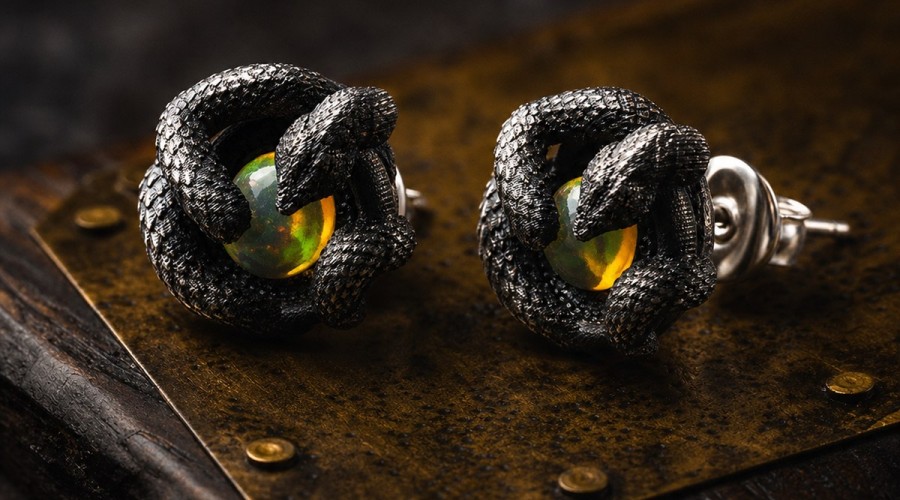
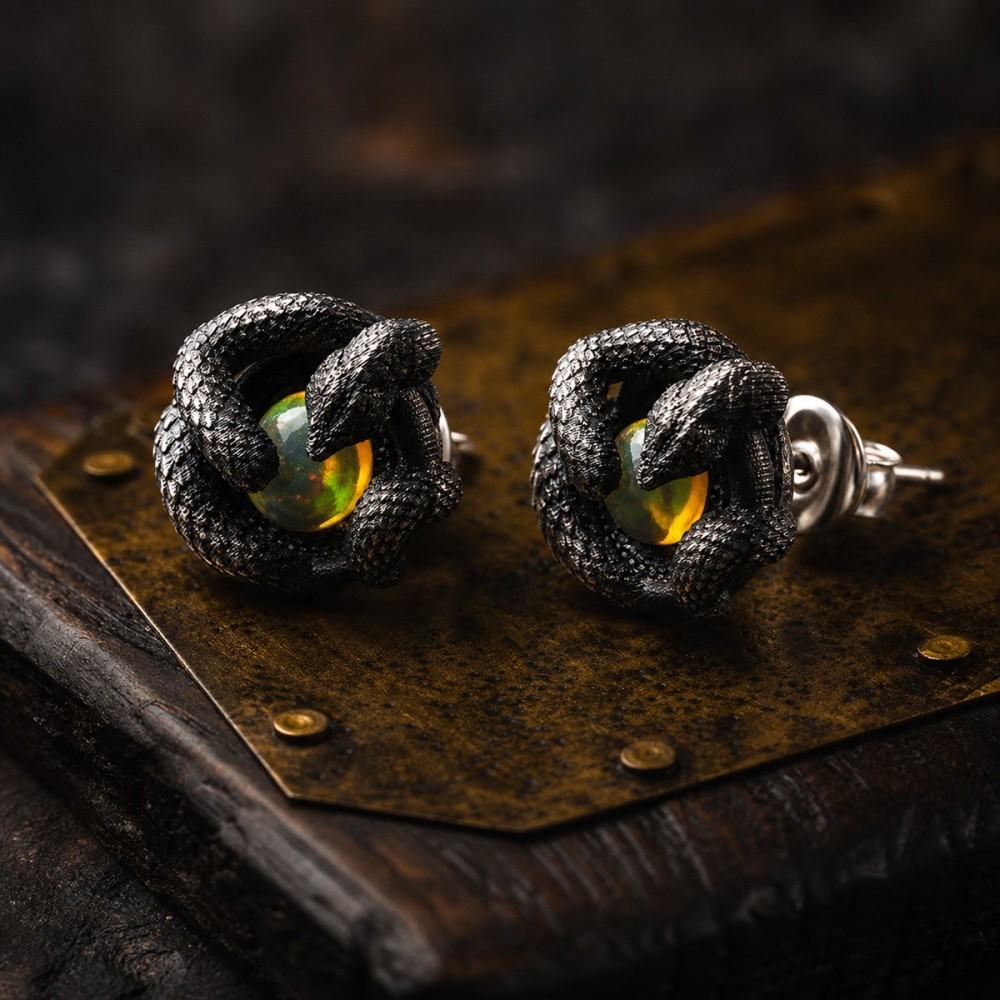
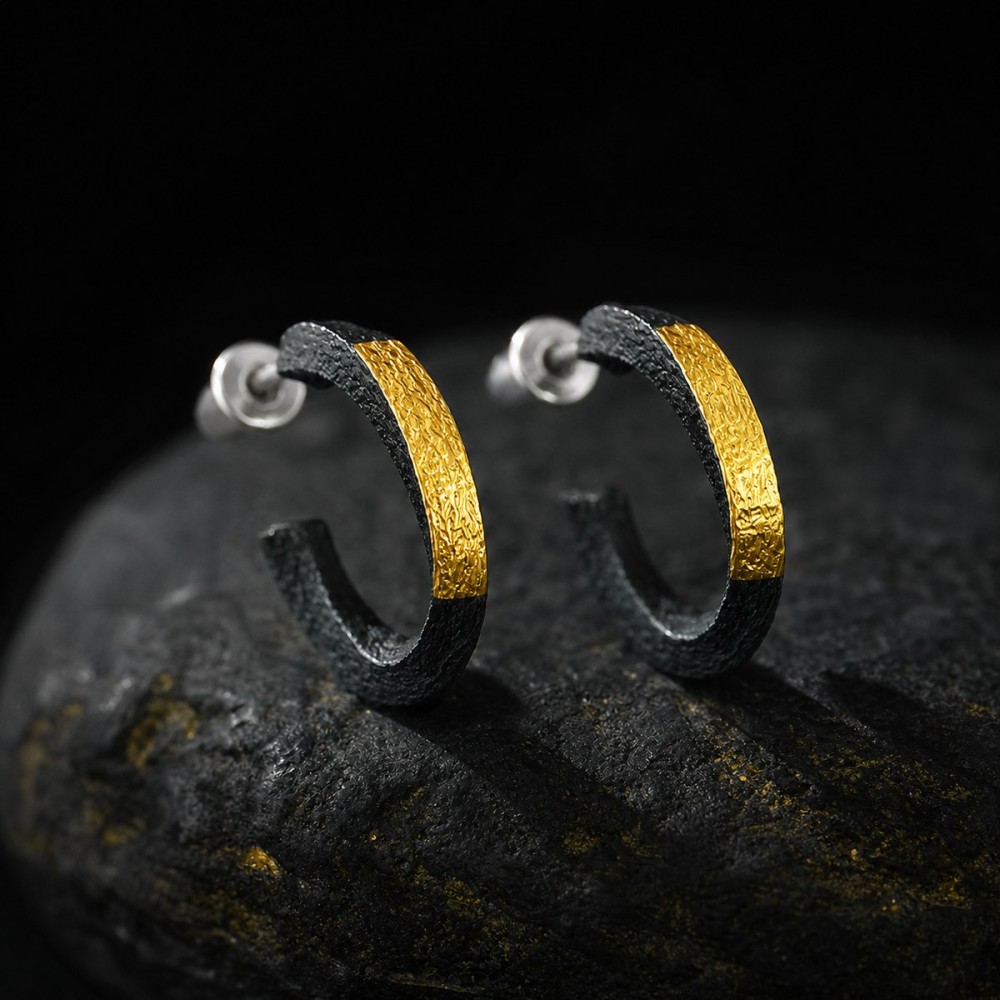
Mixed-surface earrings need zone-by-zone care. For a piece such as our oxidized snake and opal studs, avoid soaking and clean around the stone with a barely damp swab or cloth. For a dark silver earring with gold detail, do not assume that a product labelled safe for plain silver is safe for the gold application. Our 24K gold inlay guide explains why construction language matters.
Storage that slows unwanted change
- Store earrings clean and fully dry in separate, closed compartments so posts and textured faces do not scratch one another.
- Use an inert, tarnish-inhibiting storage product intended for silver, and replace it according to its instructions.
- Keep jewelry away from household chemicals, rubber bands, fragranced paper, damp bathrooms and direct contact with cosmetics.
- Put earrings on after perfume, hairspray and lotion have dried. Remove them before swimming, bathing or using cleaning products.
- Do not wrap valuable silver indefinitely in unknown tissue or plastic. Some storage materials release compounds that accelerate tarnish.
Preventive care matters because every abrasive tarnish-removal treatment removes a small amount of the surface. Conservation guidance therefore prefers reducing exposure and cleaning less often over repeated polishing.
What to do when the finish looks uneven
Bright high points, dark recesses
This is often the intended wear pattern. Stop cleaning if the design remains legible and the surface is stable.
Brown or yellow film after storage
First remove dust and surface residue with the mild routine above. If the colour remains, contact the seller or a jeweller who works with oxidized silver. Do not escalate automatically to a dip.
Loose stone, moving post or green residue
Do not keep wearing or polishing the piece. Isolate it, photograph the condition and request an assessment. Green residue can come from copper-containing corrosion products or transferred material; the cause cannot be diagnosed from colour alone.
A note about pierced-ear safety
These earrings are intended for healed piercings. The Association of Professional Piercers advises that sterling silver and gold-plated jewelry are not appropriate for new or unhealed piercings. If a piercing becomes painful, hot, very swollen or produces discharge, do not rely on jewelry cleaning as treatment; consult a qualified piercer or healthcare professional.
For material choice before buying, read 925 vs 999 silver earrings, or browse the complete silver earring collection.
Common care questions
How often should oxidized silver be cleaned?
There is no useful calendar rule. Clean when visible residue is present or before storage after heavy wear. Frequent polishing “for maintenance” is counterproductive because it changes the surface. A brief dry wipe after wear and controlled storage usually reduce the need for deeper cleaning.
Can hand sanitizer damage the finish?
Formulas vary and may contain alcohol, fragrance, moisturisers or other additives that can leave residue. Let sanitizer dry completely before touching earrings, and wipe accidental residue with the mild spot-cleaning method. Do not repeatedly soak the piece in sanitizer.
Should an oxidized earring be re-blackened at home?
We do not recommend it. Commercial patination solutions can be hazardous and the final colour depends on surface preparation, alloy and masking. An uncontrolled application may also affect stones, solder or gold details. Ask the maker or a jeweller familiar with patinated silver whether refinishing is appropriate.
What should I photograph before requesting repair?
Take one full view, one close view of the affected area, the post and back, and any hallmark or maker's mark. Use indirect daylight and avoid filters. Include the order number and explain what cleaning products, if any, were used. This evidence is more useful than a description such as “it suddenly changed colour.”