
CONSTRUCTION GUIDE · REVIEWED 20 JULY 2026
The short answer: “24K gold inlay on silver” should describe a silver earring with deliberately placed fine-gold detail, not a solid-gold earring. The phrase is not interchangeable with gold-plated silver or vermeil. Because makers can use “inlay” for different workshop methods, a trustworthy product page should identify the silver base, the gold fineness, where the gold appears and how the surface should be cared for.
First, separate four different constructions
| Term | What it should tell you | What to verify |
|---|---|---|
| Solid gold | The article or stated component is gold alloy throughout. | Karat/fineness and which components are gold. |
| Gold plated over silver | A gold layer covers silver by an applied surface process. | Base metal, gold fineness, thickness where disclosed, and care limits. |
| Vermeil | A regulated description in some markets for a specified gold coating over sterling silver. | Whether the product meets the legal definition in the country of sale. |
| Gold inlay/detail on silver | Gold is deliberately confined to selected areas of a silver design. | Exact maker's method, gold fineness, location and whether the detail is recessed or raised. |
The Federal Trade Commission warns consumers to look beyond colour and understand whether a piece is solid precious metal or a coating over another metal. UK guidance likewise requires descriptions of gold-plated silver to make the silver base and the surface application clear. These rules are useful because a gold-coloured surface can represent very different constructions and care needs.
What 24K tells you—and what it does not
Karat describes gold fineness in 24 parts; 24K indicates fine or effectively pure gold. It does not tell you how much gold is present, how it was attached, how thick a surface application is, or whether the surrounding silver is 925 or 999. Those are separate facts.
Fine gold is softer than lower-karat gold alloys. In a localized decorative detail, that softness is part of the surface character, but it also means abrasive polishing can mark or gradually reduce the detail. “24K” therefore should not be interpreted as a universal durability claim.
How to evaluate a gold-detailed silver earring
- Identify the base. Look for 925 sterling silver or 999 fine silver, and ask whether the post and back use the same material.
- Locate the gold. Product photographs should show exactly which ridges, recesses or faces carry the gold.
- Read the construction word. Inlay, plating, vermeil, foil and solid component are not synonyms.
- Ask how it ages. A maker should be able to explain whether high points may brighten, dark silver may change, or gold detail may show wear.
- Inspect the scale. A macro photograph is useful, but also check an on-ear or dimension reference so the gold accent is not visually exaggerated.
- Check care compatibility. The silver, gold, oxidation and any stone must all tolerate the proposed cleaning method.
Why makers combine dark silver and fine gold
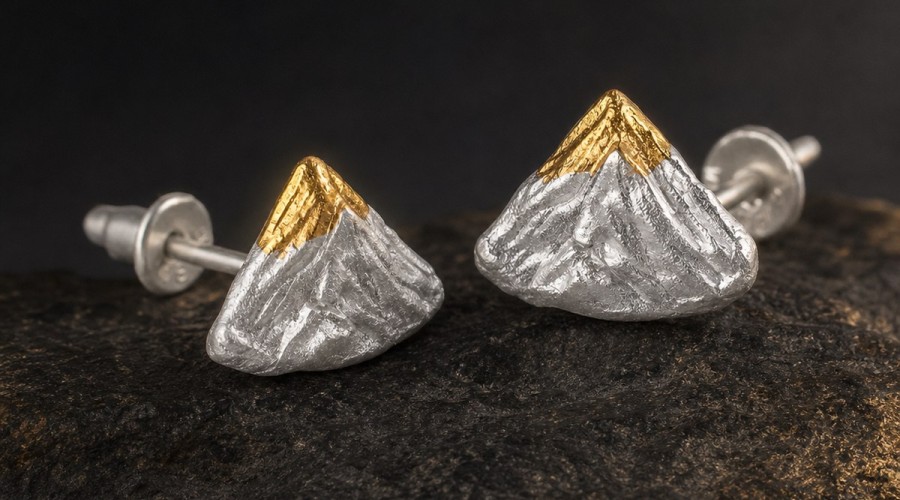
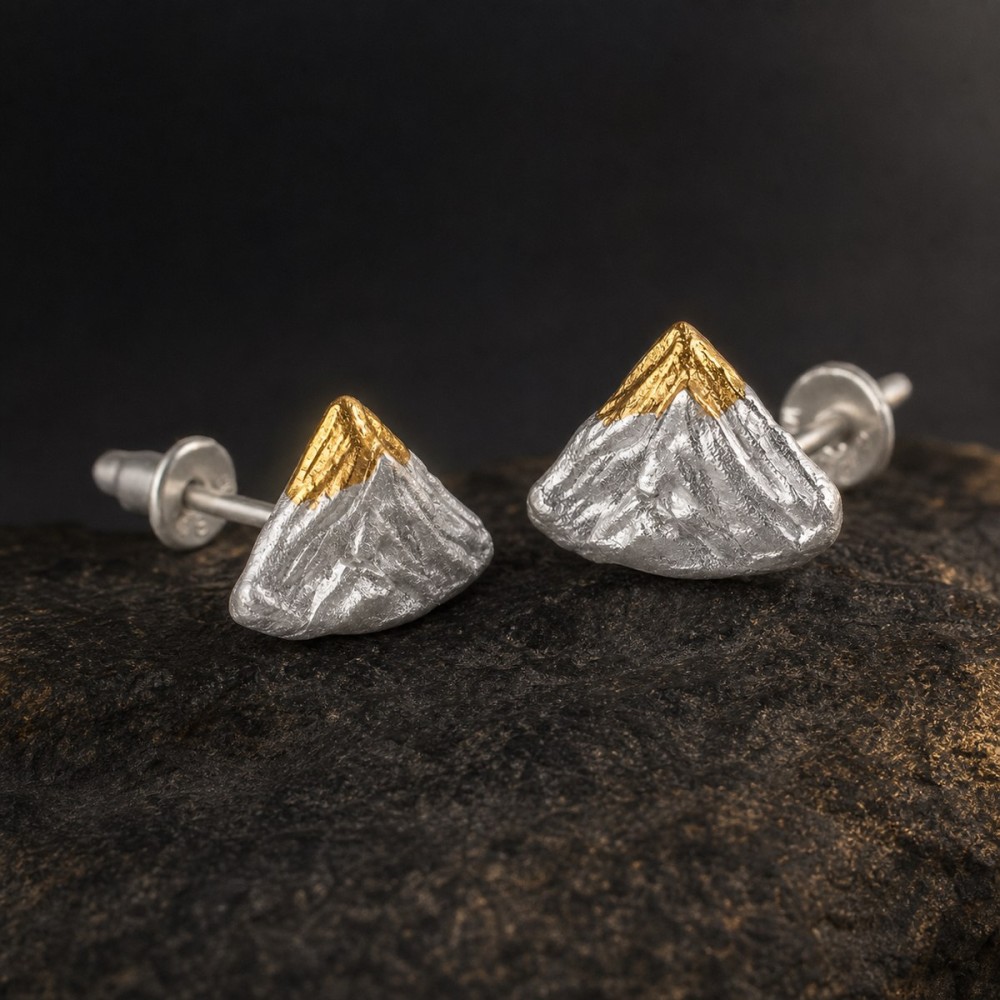
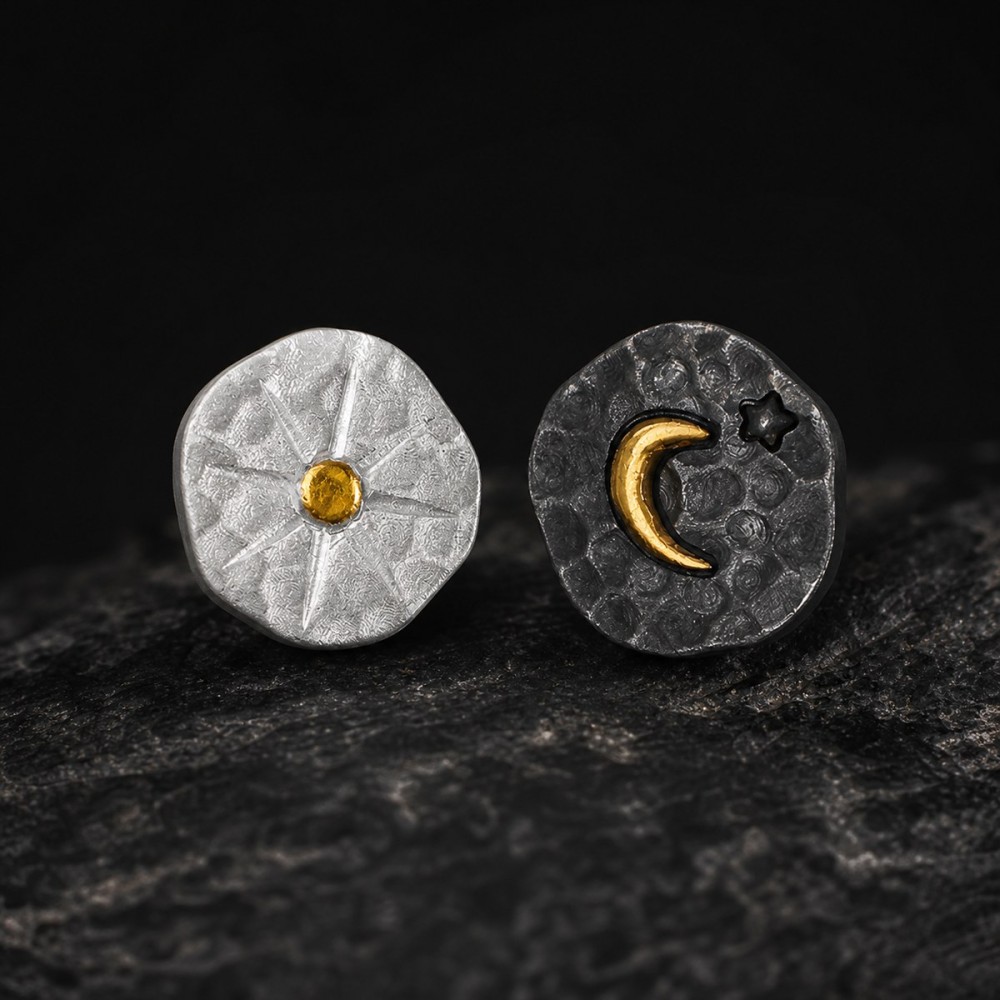
The visual effect comes from contrast. Fine gold has a warm yellow colour; oxidized silver creates a dark ground; bright silver edges add a third value. This allows a small stud or hoop to read clearly without covering the whole surface in gold. On the mountain stud earrings, the gold marks the summit. On the sun and moon studs, it identifies the celestial details. On the square black hoops, it interrupts the strong geometric edge.
Care: preserve the contrast, not just the shine
- Handle the gold detail with clean hands and avoid rubbing it with an abrasive silver-polishing cloth.
- Do not use silver dip on a mixed gold, silver and oxidized surface unless the maker explicitly approves it.
- After wear, wipe contact areas gently with a dry, soft cloth. If needed, use a barely damp cloth with mild soap, then remove residue and dry completely.
- Store each earring separately so posts and hard edges cannot scrape the gold detail.
- Apply perfume, lotion and hairspray before putting earrings on, and allow products to dry first.
For the full cleaning sequence and methods to avoid, use our oxidized silver care guide.
Questions a useful product page should answer
- Is the base 925 sterling silver or 999 fine silver?
- Does the stated material include the post and back?
- Is the product sold as one earring or a pair?
- Where is the 24K gold located?
- Is “inlay” the maker's description of localized detail, and is the workshop method explained?
- Is the black colour intentional oxidation?
- What dimensions and closure type should the buyer expect?
- What cleaning methods are specifically excluded?
Our transparency standard
We use product photography to show where gold appears and we describe the piece as a silver earring with 24K gold detail—not as a gold earring. When a construction detail is not confirmed, the correct response is to ask, not to replace it with a broad luxury claim. You can compare current designs in the 24K gold inlay silver earring collection and then verify the material line on the individual product page.
Common questions
Is 24K gold inlay the same as vermeil?
No. Vermeil is a regulated description for a qualifying gold coating over sterling silver in certain markets. Localized gold detail described as inlay has a different visual and construction claim. If a seller uses both terms for one product, ask for the exact method and which standard supports the description.
Will the gold detail tarnish?
Fine gold is highly resistant to ordinary tarnish, but the surrounding silver can darken and surface contamination can make any area look dull. A colour change at an edge does not reveal the cause by itself. Clean gently and seek an assessment rather than using an aggressive dip.
Can the gold be restored?
Possibly, but restoration depends on how the gold was applied and what has worn. Replating, regilding and repairing an inlay are different workshop operations. Send clear photographs and the original product information to the maker or a goldsmith before authorising work.
Why does the gold look different across photographs?
Fine gold reflects its surroundings. Warm indoor light can intensify yellow; cool daylight can make it quieter; exposure settings can flatten texture. Evaluate multiple views, including a neutral-light image and a scale reference. Product photography should clarify the design, not substitute for a material description.