MATERIAL GUIDE · REVIEWED 20 JULY 2026
The short answer: 925 sterling silver is 92.5% silver and 7.5% other metals, while 999 fine silver is 99.9% silver. Neither number is a quality score. It is a fineness mark: parts of silver per thousand. Sterling is usually selected when a design needs more structural strength; fine silver is valued for its higher silver content and a subtly different surface character. The better choice depends on the earring's construction, weight and intended use.
925 and 999 at a glance
| Question | 925 sterling silver | 999 fine silver |
|---|---|---|
| Silver content | 925 parts per thousand (92.5%) | 999 parts per thousand (99.9%) |
| What the remainder means | Other metals are added to change working and wear properties; the exact alloy should be confirmed with the seller. | Only about one part per thousand is not silver. |
| Typical design reason | Useful for thin posts, catches or designs that need more rigidity. | Useful for sculptural surfaces and pieces where high silver fineness is central to the design. |
| Wear expectation | Generally more resistant to bending than fine silver, although construction matters. | Softer and more malleable; fine details and posts should be handled deliberately. |
| Tarnish | Can tarnish; copper-containing sterling can form both silver and copper sulfides. | Can also tarnish. Higher purity does not make silver immune to sulfur in the environment. |
| Best question to ask | What is the full metal composition, especially for the post and back? | Is the entire earring 999, or only the decorative body? |
The United States Federal Trade Commission explains that “silver,” “sterling” and “sterling silver” describe products containing 92.5% pure silver, often marked 925. UK hallmarking guidance separately recognises 999 as fine silver and 925 as sterling. These are useful reference points, but marking rules vary by market and by the weight of an article. A missing stamp on a very small earring is not, by itself, proof of poor material; the product description and the seller's traceability still matter.
Why 925 is not “worse” than 999
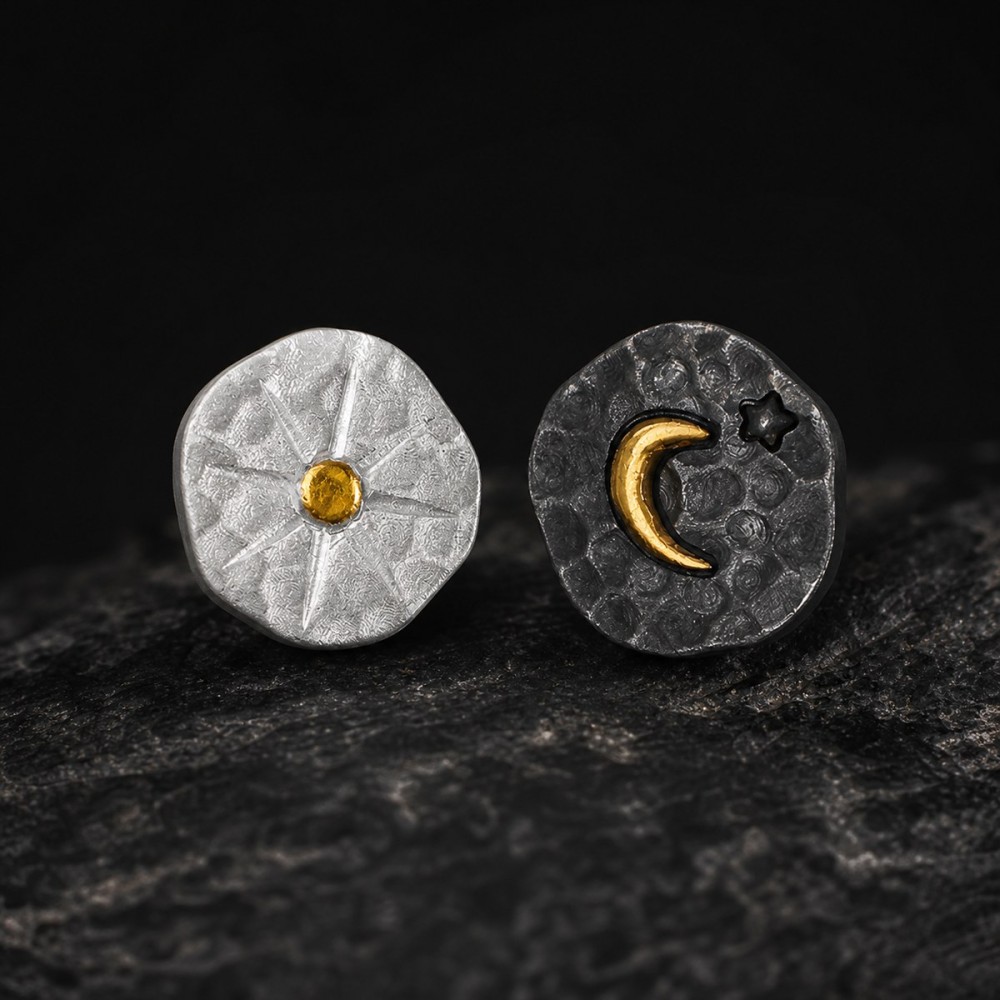
Purity and fitness for purpose are different questions. Fine silver contains more silver, but it is also softer. A jeweller may deliberately choose sterling for a post, hinge or narrow hoop because those parts experience repeated pressure. The same maker may choose fine silver for a broader decorative face because it offers the desired colour, weight and working response.
That is why a useful product page should say more than “premium silver.” It should identify the fineness, the construction and any other visible material. For mixed-metal earrings, it should also explain whether gold is an inlay, accent, surface coating or solid component. Our silver earring collection and silver earrings with 24K gold details are organised so the material direction is clear before you open an individual product.
How each alloy changes an earring in real use
1. Posts and pressure points
A post is thin and repeatedly loaded when the back is attached. Material is only one factor: post diameter, solder joint, heat treatment and how the wearer removes the back all affect durability. Do not bend a post to “test” purity. If a post becomes misaligned, stop forcing the back and ask a jeweller to assess it.
2. Sculptural faces and oxidized recesses
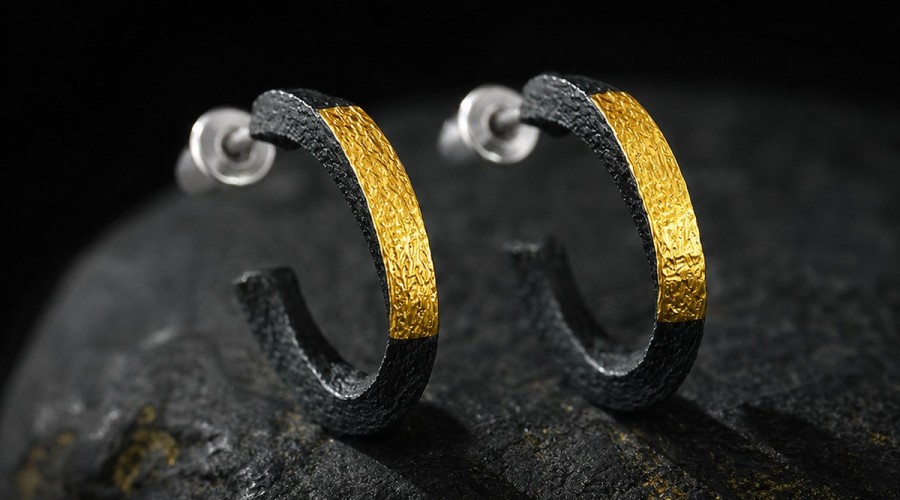
Broad, textured faces distribute loads differently. They may be intentionally oxidized so dark recesses make the relief legible. That dark finish is a design feature, not dirt. Aggressive polishing can flatten contrast and remove a small amount of metal each time. Read our oxidized silver care guide before cleaning a blackened piece.
3. Hoops, hinges and catches
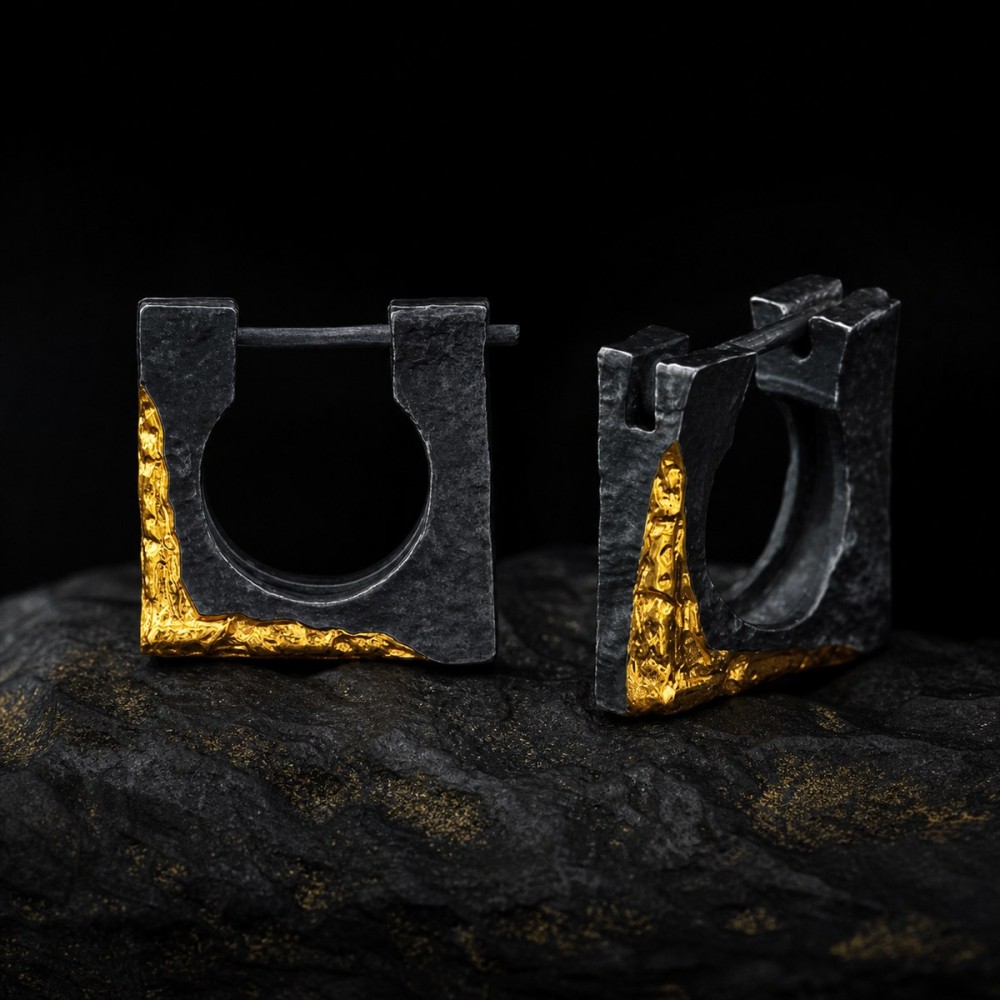
For a hoop, inspect the mechanism as closely as the decorative surface. The closure should align without side-loading; a hinged section should move smoothly but not feel loose. Our small faceted hoop and square black hoop show how geometry and closure design affect the wearing experience beyond the fineness number.
A six-point buying check
- Read the full material line. Look for 925/sterling or 999/fine silver rather than a vague colour description.
- Confirm what the claim covers. Ask whether the post, back, hinge and decorative body use the same alloy.
- Identify surface treatments. Oxidation, gilding, plating and inlay require different care.
- Check the closure. A good alloy cannot compensate for a poorly aligned post or catch.
- Match weight and scale to your ear. Product dimensions and pair/single quantity are more useful than a generic “unisex” label.
- Keep the seller's description. A clear invoice or product record is useful if you later need care, repair or material clarification.
Which should you choose?
Choose 925 when you prioritise a more rigid post, catch or fine structure. Choose 999 when you value high silver fineness and a sculptural fine-silver surface, and you are comfortable handling a softer metal carefully. For many well-made earrings, the right answer is not ideological: it is the material and construction that best serve the design.
If you are choosing between asymmetric and paired wear, continue with our single earring or pair styling guide.
Common questions
Is 999 silver automatically safer for sensitive ears?
No universal sensitivity claim can be made from the fineness number alone. A complete earring can include a post, solder, back, stone setting or surface treatment made differently from the decorative body. Individual reactions also vary. Ask for the composition of every part that touches the ear. If you have a known allergy or an active piercing problem, seek advice from a qualified clinician or professional piercer rather than using purity as a self-diagnosis.
Can I identify 925 or 999 by colour?
Not reliably. Lighting, polishing, oxidation, photography and surrounding colours can make two silver alloys look different or almost identical. A stamp can support identification, but a clear seller description and, when needed, a formal test are stronger evidence than colour alone.
Does a higher silver number mean a higher price?
Metal content is only one part of price. Weight, hand finishing, stone setting, gold detail, design time, closure construction and production scale all matter. Compare the actual piece—not just the number stamped on it.
Can I wear fine silver every day?
Many people do, especially in compact studs and substantial forms. Everyday suitability depends on construction and habits. Remove fine-silver earrings before sport, sleep, bathing or situations where a post or hoop can be pulled, and store them separately rather than loose in a tray.