
Personalized earrings may be excluded from change-of-mind returns, but that is not the same as having no rights when an item is faulty, incorrect or different from its description. Start by identifying why you want to return the earrings, then check the seller's current policy and the consumer rules that apply to your purchase. A cancellation before dispatch is another separate question.
This guide is general purchasing information, not legal advice or a decision on an individual claim. UK, EU, Australian and US guidance below has different territorial scope. No single return period applies to every international order.
Three questions that should not be combined
1. Have you changed your mind?
You received the initials and finish you ordered, but now prefer another design. This is a change-of-mind request. The seller's voluntary policy and any applicable withdrawal rights matter. Do not assume that a standard online-shopping cooling-off period includes a genuinely personalized item.
2. Is there a problem with what was supplied?
A wrong letter, damaged component or material difference from the agreed description is a different issue. Document what was ordered and what arrived. A statement excluding custom items from change-of-mind returns does not itself settle a fault or misdescription claim.
3. Are you asking to cancel before shipment?
Contact the seller promptly and ask for the actual order status. Do not equate sending a cancellation message with a confirmed cancellation. A request to change a letter, a cancellation request and a dispatch delay each need a clear response.
What official guidance says—and where
GOV.UK's returns guidance identifies personalized or custom-made goods as an exception to ordinary change-of-mind refunds. It separately addresses faulty goods and says a business must not take away customers' legal rights. Its hygiene exception refers to sealed goods that cannot be returned after opening for health or hygiene reasons. That wording should not be turned into a blanket assertion that every earring purchase loses all return rights.
For the EU, Your Europe explains withdrawal rights for distance purchases and an exception for goods made to order or clearly personalized. It also distinguishes the cost of returning defective goods from the cost of an ordinary cooling-off return. Check national rules and whether the transaction is covered; this is not a worldwide promise of a fourteen-day return.
In Australia, the ACCC explains consumer guarantees, including acceptable quality and matching the description. These basic rights cannot be removed by a seller's statement. The exact remedy depends on the circumstances; neither a guarantee nor this article means every complaint automatically produces an immediate refund.
For US online shopping, the FTC recommends checking refund terms and keeping purchase records. Its practical questions include the return deadline, who pays postage and whether fees apply. These are useful questions to ask a seller, not proof of a universal statutory change-of-mind right.
The FTC's separate guide to its Mail, Internet, or Telephone Order Merchandise Rule addresses shipping promises and delay notices, including cancellation and refund obligations when its rule applies. Shipment timing is not the same as the item's arrival date, and a delay issue should not be assessed only through the custom-item return clause.
A useful comparison framework
- Correct item, new preference: check change-of-mind eligibility and any applicable exception.
- Different from the order: compare the confirmation, selected options and delivered item; ask the seller to investigate.
- Visible damage or suspected fault: stop using the item and document the condition before attempting a repair.
- Order not yet dispatched: request cancellation promptly and obtain a status confirmation.
- Missed shipment promise: keep the original promise and any delay notice; check the rules applicable to the transaction.
These categories organize the conversation. They are not a substitute for legal classification. Choosing a letter from available stock does not, without more information, establish that every jurisdiction treats the purchase as legally personalized.
A real example: gold-inlay initial studs
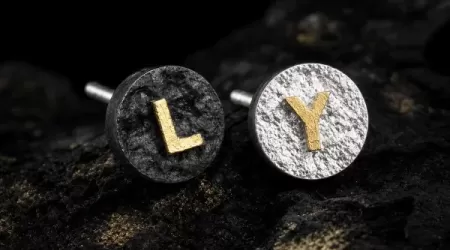
The live Personalized Initial Stud Earrings listing offers a single stud or pair, letter selections and Black Oxidized or Natural Silver finishes. It describes a 999 fine-silver disc with a 24K gold-inlaid uppercase letter. Those are listing statements, not an independent assay or a legal ruling on the order.
Save the actual chosen quantity, initials and finish. If a pair arrives with a letter different from the confirmation, describe that mismatch specifically rather than calling it a general change of mind. If the correct letter arrives but you prefer another, say that instead. For selection checks before purchase, use the separate custom-initial gift order checklist.
Read the store policy without losing the distinction
Skullearring's current returns policy asks customers to contact the store within thirty days of delivery for a return request and obtain approval before sending a parcel. It excludes personalized and custom items from change-of-mind returns, while retaining support for items arriving damaged, defective or materially different from the order. It also states that applicable consumer-law rights are not limited by the policy.
Use the policy for current instructions and ask for the approved return destination. Do not assume the address on the original parcel is the return address. A store request window is not a statement that mandatory legal rights expire at the same point.
What to keep and what to send
As practical purchasing advice, keep the order confirmation, product description at purchase, selected options, delivery date and relevant correspondence. For a problem report, provide a concise explanation and clear photographs. Share necessary order details privately through the store contact channel, not in a public blog comment.
Ask what solution is proposed, whether a return is needed and how shipping will be handled. Do not repair, polish away evidence or continue wearing a damaged item while awaiting instructions. These are documentation precautions, not a claim that every mark is a manufacturing fault.
Bottom line
“Custom items cannot be returned for a change of mind” and “customers have no rights” are not equivalent statements. Identify the actual issue, preserve the agreed specification and use both the seller's current instructions and the rules that apply to the transaction. Resolve uncertain classification or disputed remedies with the relevant consumer authority or a qualified adviser.
Sources and evidence limits
The five linked official sources provide jurisdiction-specific consumer guidance. They do not endorse Skullearring, decide an individual dispute or authenticate a product. Product options were checked on 17 September 2026; store policy statements reflect its linked page, last updated 20 July 2026. Examples of wrong letters and damage above are hypothetical, not reported customer cases.
Leave a comment