Short answer: store sterling-silver earrings clean, completely dry, separated from one another, and protected from polluted air. A small, well-fitting enclosure made from a stable material is more useful than an elaborate open jewelry display. Keep rubber, wool, felt of unknown composition, PVC, household paper, perfume, cosmetics and damp bathroom air away from the silver. For earrings with intentionally darkened recesses, gold or brass inlay, gemstones, adhesives or mixed-metal construction, prevention matters especially because aggressive polishing can change the designed surface.
This is a conservation-informed household guide, not a claim that ordinary jewelry needs museum conditions. Museum guidance is useful because it explains why silver darkens and which storage materials can create avoidable risks. The practical goal is modest: reduce exposure, avoid abrasion, and make inspection easy. Tarnish is a surface reaction, not proof that an earring is fake, unsafe or “ruined.”
Why sterling silver tarnishes in storage
Silver does not need to be worn to tarnish. The Canadian Conservation Institute (CCI) explains that sulfur-containing gases in air react with silver and form a surface layer of tarnish, commonly silver sulfide. Its detailed silver-tarnish guide shows why an apparently closed box is not automatically protective: the enclosure itself can contain unsuitable materials or may leak polluted air.
Humidity is not the only cause, but moisture can make corrosion processes easier. CCI’s broader guidance on storing metal objects identifies relative humidity, salts, dust, volatile organic acids and other contaminants as interacting risks. That does not justify turning a bedroom into a climate-controlled vault. It does justify avoiding bathrooms, windowsills, damp basements and containers that trap moisture.
Research on sterling-silver corrosion also warns against oversimplification. A peer-reviewed study of sterling-silver samples found that corrosion layers differed according to the exposure method and environment; artificially tarnished samples were not necessarily representative of naturally tarnished historical silver. See the open-access study, “The sulfidation process of sterling silver in different corrosive environments”. For a jewelry owner, the lesson is practical: do not diagnose every color change from a photograph or assume one cleaning recipe fits every finish.
A decision table for home storage
| Storage choice | Why it helps | Important limit |
|---|---|---|
| Individual stable pouch or small box | Reduces air exchange, dust, scratches and contact between pieces. | The earring must be completely dry; an enclosure can also trap moisture or residues. |
| Acid-free, sulfur-free tissue as a loose wrap | Adds a physical barrier and keeps posts from rubbing decorated faces. | “Paper” alone is not a specification. Ordinary tissue, cardboard and printed paper may be unsuitable. |
| Anti-tarnish strip or cloth used as directed | May reduce tarnishing gases within a reasonably sealed enclosure. | It is consumable, not permanent, and should not be assumed safe in direct contact with every object. |
| Dry interior drawer away from household chemicals | A more stable environment than an open bathroom tray or sunny windowsill. | A wooden drawer, adhesive-lined box or rubber insert can itself emit pollutants. |
| Separate storage for mixed-metal or gemstone pieces | Prevents abrasion and allows care to follow the most vulnerable component. | Do not apply silver-only cleaning advice to stones, adhesives, inlays or coatings. |
The seven-step storage method
1. Identify what you are storing
Read the product description and examine the piece before choosing a routine. “Silver-colored” is not a material. Solid sterling silver, fine silver, silver plate, intentionally oxidized silver, gemstone settings, gold inlay and brass details can respond differently to polishing and immersion. Our guide to 925 versus 999 silver earrings explains the fineness terms; it does not imply that a hallmark alone reveals every solder, surface treatment or decorative component.
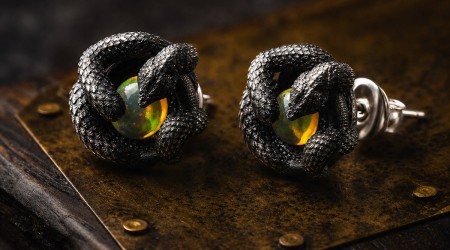
For example, a snake stud with an opal and oxidized silver surface should be treated as a composite object. The stone, setting and intentionally darkened recesses are part of the decision. Do not put it into a household dip simply because the base is described as silver.
2. Remove ordinary residues conservatively
Storage should not seal perfume, hairspray, sweat, skin oils or cleaning residue against the metal. After wear, inspect the earring under good light. For a straightforward solid-silver surface, a clean, soft, dry cloth may be enough for routine handling marks. If the piece needs wet cleaning, follow the maker’s verified care directions and the requirements of every material present.
CCI’s care and tarnish-removal note stresses examination before treatment and warns that polishing removes material and can harm gilding, plating, chased detail and composite construction. Museum treatment is not a household recipe, but the “examine first” principle transfers directly.
3. Let every component dry completely
Do not close a damp earring inside a low-air-exchange bag. Pay attention to hinges, hollow backs, under-settings, clutch backs and narrow joints where water can remain after the visible face looks dry. Lay the piece on a clean, lint-free surface in a dry room until all components are dry. Do not accelerate drying with high heat.
4. Separate the pair and secure the sharp parts
Two earrings stored face-to-face can scratch each other. Posts can score soft surfaces, and textured hoops can catch on delicate climbers. Use separate compartments or loose individual wraps. Fasten hinged hoops without forcing the closure. Keep detachable backs with the matching piece, but position them so the post cannot press into a decorated face.
5. Choose a small, stable enclosure
A clean polyethylene bag or a purpose-made archival-quality enclosure may reduce exposure when used correctly, but vague marketing words such as “premium” or “velvet” do not identify chemical stability. The National Park Service’s collection-environment guidance recommends separating pollutant-emitting materials and describes wrapping silver in acid-free tissue before placing it in anti-tarnish cloth bags. See the NPS Museum Handbook chapter on collection environments.
At home, avoid direct contact with rubber bands, rubber foam, wool, unknown felt, PVC/vinyl, newspaper, printed receipts and low-grade cardboard. Do not assume a decorative wooden box is inert; wood products, finishes and adhesives can emit compounds. If the original jewelry box has an unknown lining, place the earring first in a known stable inner enclosure rather than allowing long-term direct contact.
6. Add tarnish control only with clear instructions
Anti-tarnish papers, cloths and sorbent strips can be useful inside a reasonably sealed space, but they have finite capacity. Note the installation date and follow the manufacturer’s replacement and contact instructions. The Metropolitan Museum of Art’s care manual describes tarnish-resistant cloth and vapor-phase inhibitors as storage tools, while also cautioning that some inhibitor substances must not contact objects directly. Consult The Met’s care and handling manual.
Do not improvise with household chemicals, mothballs or scented products. A storage material should solve a defined risk without introducing an unknown residue.
7. Store in a stable place and inspect periodically
Choose an interior drawer or cabinet away from a shower, kitchen fumes, cleaning supplies, direct sun and large temperature swings. Keep the enclosure off floors and away from exterior walls if dampness is possible. Inspect periodically under consistent light. Look for new darkening, green or powdery corrosion products, loosened stones, distorted posts, failing hinges or adhesive changes. Record a photograph if you need to judge whether a change is progressing.
What to do with intentionally oxidized silver
Oxidized silver uses controlled dark areas to make relief, engraving or sculptural texture legible. Those dark recesses are not automatically dirt. Repeated whole-surface polishing can flatten contrast, brighten areas intended to remain dark and round crisp detail. Our separate guide on caring for oxidized silver earrings addresses cleaning decisions; this article focuses on preventing the need for cleaning through dry, separated, low-pollutant storage.
The Getty’s account of conserving the Berthouville silver treasure explains that tarnish is silver sulfide and describes the use of tarnish-inhibiting storage materials after professional treatment. It also shows why museum procedures should not be copied casually: conservators assessed condition, selected a target appearance and applied treatments suited to historically important objects. For jewelry, the transferable principle is prevention—not museum-grade coating at home.
Special cases: gemstones, inlay, brass and adhesives
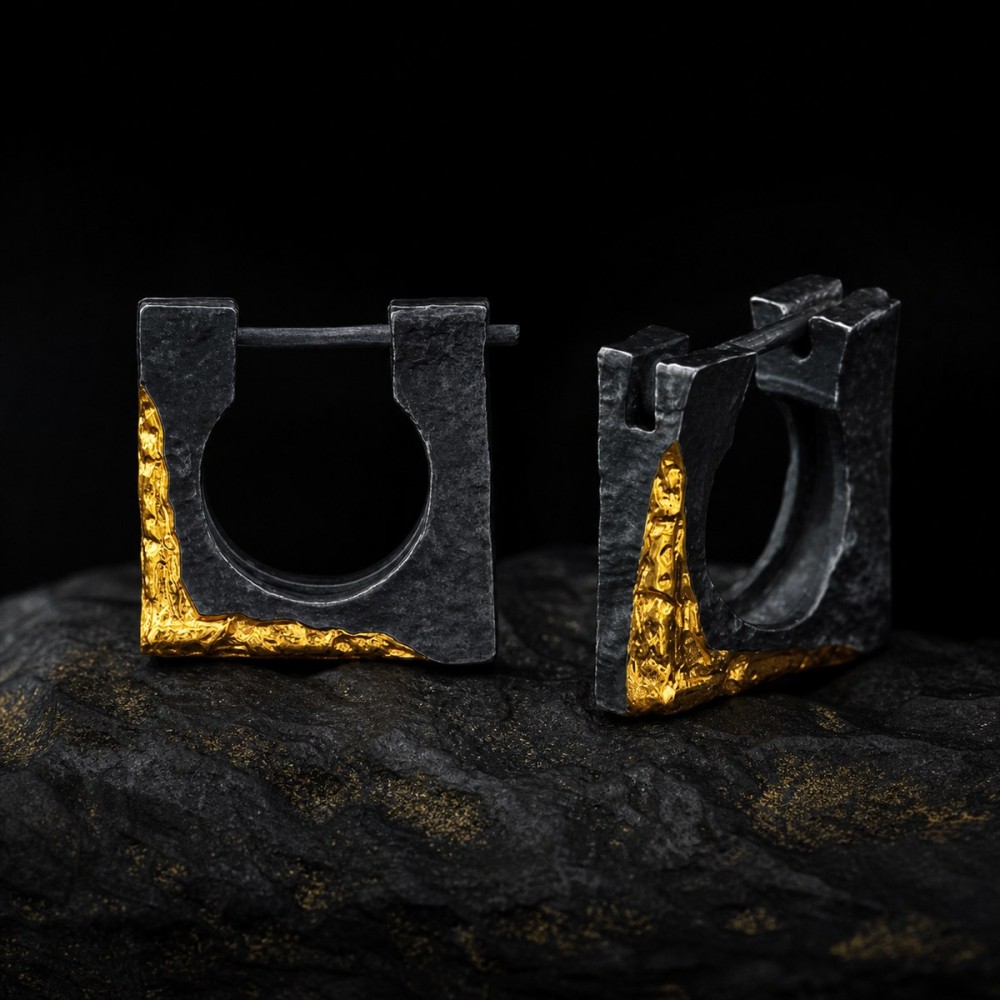
When an earring combines materials, follow the limits of the most vulnerable one. Some stones are sensitive to heat, chemicals, prolonged moisture or ultrasonic cleaning. Adhesives and lacquered surfaces create another set of limits. Brass can develop its own surface changes and may react differently from silver. Gold inlay can be damaged by abrasive polishing even when gold itself is chemically stable.
A mechanical-style 925 silver gemstone stud, for example, has a more complex structure than a plain silver stud. Storage should prioritize separation, dryness and inspection of the setting. Do not infer a gemstone identity, treatment or cleaning tolerance from color alone.
Common storage mistakes
- Leaving earrings on an open bathroom tray: this maximizes exposure to humidity, sprays, dust and handling.
- Putting a damp piece into an airtight bag: reduced air exchange cannot compensate for trapped moisture.
- Stacking multiple earrings together: posts, hinges and textured surfaces abrade one another.
- Wrapping in unknown paper or felt: a soft feel does not prove chemical suitability.
- Using rubber bands: rubber can contain sulfur compounds and can also leave pressure marks or residues.
- Polishing before every storage cycle: polishing is material removal, not preventive storage.
- Treating designed oxidation as damage: finish intent must be established before cleaning.
- Ignoring the backs: backs, hinges and posts need dry, separated storage too.
A practical storage kit
You do not need a large collection of products. Start with a clean dry drawer, small individual enclosures of known composition, acid-free sulfur-free tissue where appropriate, labels, and a simple inspection note. Add a reputable anti-tarnish product only when its instructions identify how it should be used. Keep the care kit itself away from perfume, household cleaners and bathroom moisture.
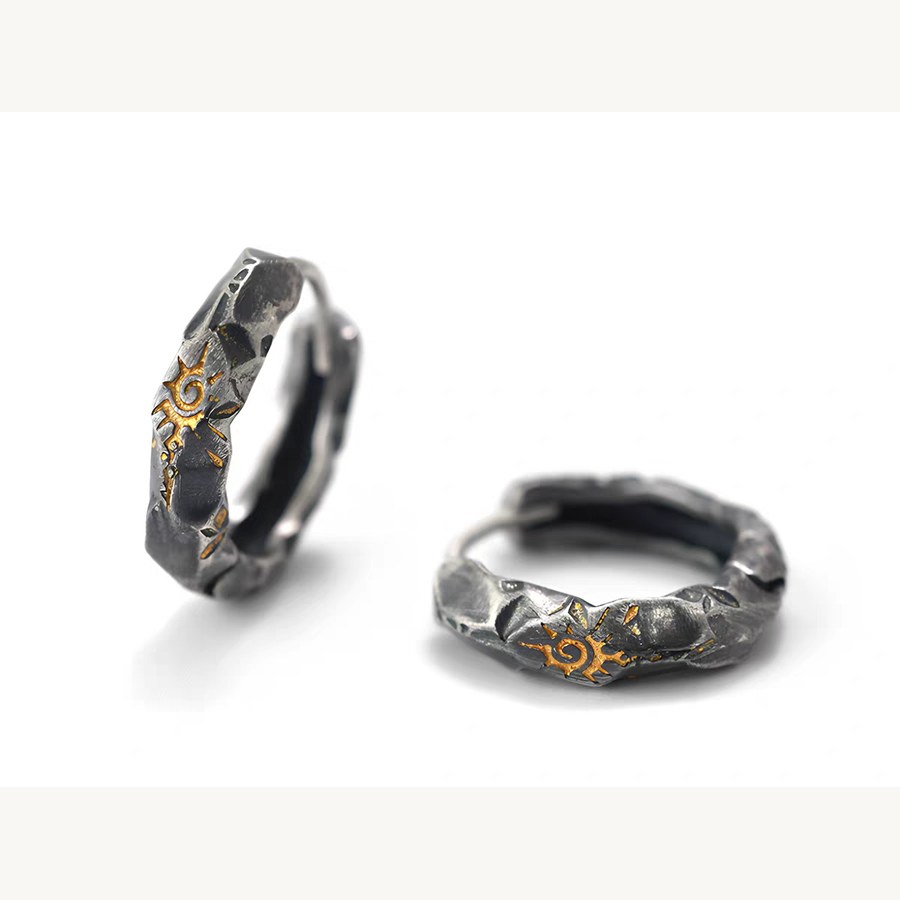
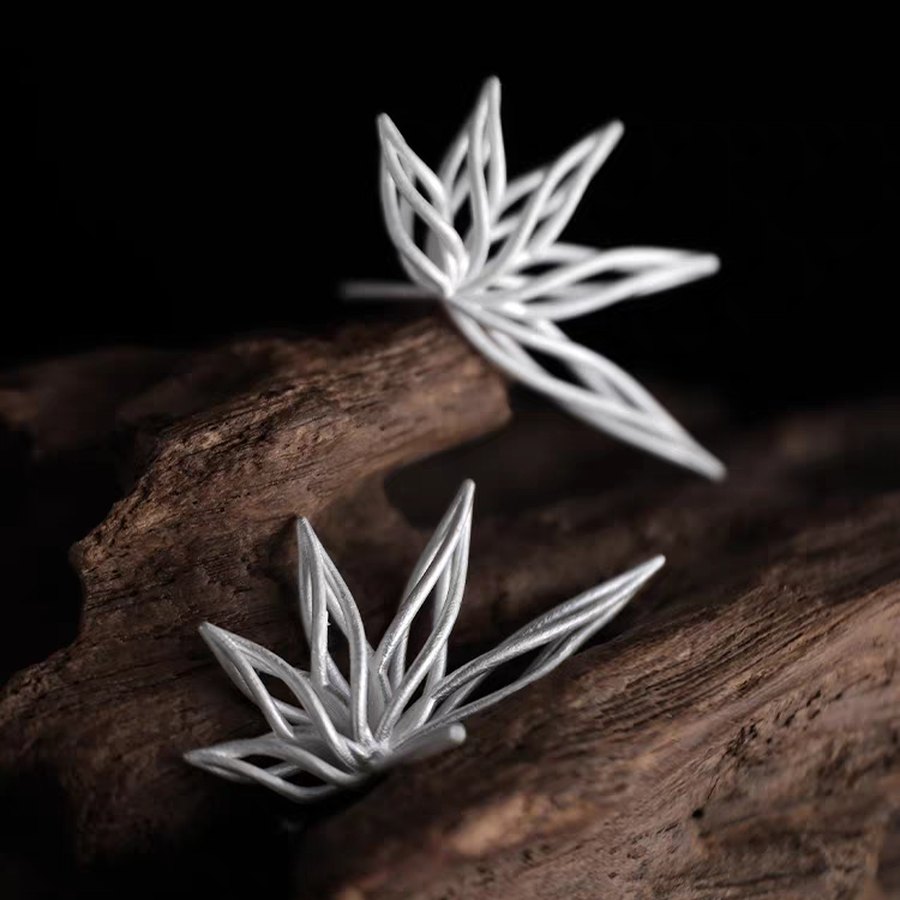
Label pieces that have unusual finishes or components. For directional designs such as a bamboo-leaf ear climber, record left/right orientation so that trying to force the wrong side does not become a handling risk. For hinged pieces such as the oxidized sun hoop, inspect the closure rather than repeatedly flexing it during storage.
When home care should stop
Stop and seek advice from a qualified jeweler or conservator if a stone moves, a post bends or cracks, a hinge no longer aligns, plating appears thin, green or powdery corrosion appears, an adhesive changes, or the surface is historically or personally important and you cannot identify the finish. Also stop if a cleaning method would require guessing what the piece is made from.
Storage guidance cannot diagnose skin reactions or piercing problems. If the ear itself is painful, swollen, bleeding or otherwise concerning, remove the jewelry if that can be done safely and consult an appropriate healthcare or piercing professional. A clean storage box is not a treatment.
FAQ
Should sterling-silver earrings be stored in plastic bags?
A clean, stable polyethylene bag can reduce polluted-air exchange, particularly with a suitable inner wrap, but the earring must be completely dry. Avoid PVC/vinyl and unknown soft plastics. A bag is an enclosure, not a guarantee against tarnish.
Can I store a pair together?
Use separate compartments or individual loose wraps so the faces, posts and closures cannot rub. A matched pair can remain in the same outer box while still being physically separated.
Does silica gel prevent silver tarnish?
Silica gel manages moisture within a suitably closed space; it does not remove every sulfur-containing pollutant. It also requires correct conditioning and monitoring. For ordinary household jewelry, avoiding damp locations and sealing only dry pieces is the simpler first step.
Is black tarnish dangerous?
Color alone does not establish a health hazard, material identity or treatment need. Tarnish on silver is generally a surface reaction, but jewelry can also include other metals, coatings, stones and residues. Identify the construction before deciding what the change means.
Should I polish earrings before storage?
Not automatically. Remove ordinary residues conservatively and store the piece dry. Polishing removes material and may change intentional oxidation, inlay, plating or fine texture. Use the least aggressive method appropriate to the verified construction.
How often should stored earrings be checked?
There is no universal interval. Inspect more often in humid or polluted environments, after changing storage materials, or when the piece has mixed materials. A dated photograph makes gradual change easier to recognize.
Sources and review date
- Canadian Conservation Institute, “Understanding how silver objects tarnish” and CCI Notes on silver care and metal storage.
- U.S. National Park Service, Museum Handbook, Part I: Museum Collections Environment.
- Metropolitan Museum of Art, The Care and Handling of Art Objects.
- Getty Conservation Institute/Getty Museum, “Conserving the Berthouville Treasure.”
- Museum Conservation Institute, Smithsonian Institution, bibliographic record for “Historical silver: storage, display, and tarnish removal.”
- Degrigny et al., peer-reviewed study of sterling-silver sulfidation environments, Heritage Science.
Reviewed: July 28, 2026. This guide applies preventive-conservation principles to household earring storage. Product materials and care instructions should be checked again if a product specification changes.
Short answer: store sterling-silver earrings clean, completely dry, separated from one another, and protected from polluted air. A small, well-fitting enclosure made from a stable material is more useful than an elaborate open jewelry display. Keep rubber, wool, felt of unknown composition, PVC, household paper, perfume, cosmetics and damp bathroom air away from the silver. For earrings with intentionally darkened recesses, gold or brass inlay, gemstones, adhesives or mixed-metal construction, prevention matters especially because aggressive polishing can change the designed surface.
This is a conservation-informed household guide, not a claim that ordinary jewelry needs museum conditions. Museum guidance is useful because it explains why silver darkens and which storage materials can create avoidable risks. The practical goal is modest: reduce exposure, avoid abrasion, and make inspection easy. Tarnish is a surface reaction, not proof that an earring is fake, unsafe or “ruined.”
Why sterling silver tarnishes in storage
Silver does not need to be worn to tarnish. The Canadian Conservation Institute (CCI) explains that sulfur-containing gases in air react with silver and form a surface layer of tarnish, commonly silver sulfide. Its detailed silver-tarnish guide shows why an apparently closed box is not automatically protective: the enclosure itself can contain unsuitable materials or may leak polluted air.
Humidity is not the only cause, but moisture can make corrosion processes easier. CCI’s broader guidance on storing metal objects identifies relative humidity, salts, dust, volatile organic acids and other contaminants as interacting risks. That does not justify turning a bedroom into a climate-controlled vault. It does justify avoiding bathrooms, windowsills, damp basements and containers that trap moisture.
Research on sterling-silver corrosion also warns against oversimplification. A peer-reviewed study of sterling-silver samples found that corrosion layers differed according to the exposure method and environment; artificially tarnished samples were not necessarily representative of naturally tarnished historical silver. See the open-access study, “The sulfidation process of sterling silver in different corrosive environments”. For a jewelry owner, the lesson is practical: do not diagnose every color change from a photograph or assume one cleaning recipe fits every finish.
A decision table for home storage
| Storage choice | Why it helps | Important limit |
|---|---|---|
| Individual stable pouch or small box | Reduces air exchange, dust, scratches and contact between pieces. | The earring must be completely dry; an enclosure can also trap moisture or residues. |
| Acid-free, sulfur-free tissue as a loose wrap | Adds a physical barrier and keeps posts from rubbing decorated faces. | “Paper” alone is not a specification. Ordinary tissue, cardboard and printed paper may be unsuitable. |
| Anti-tarnish strip or cloth used as directed | May reduce tarnishing gases within a reasonably sealed enclosure. | It is consumable, not permanent, and should not be assumed safe in direct contact with every object. |
| Dry interior drawer away from household chemicals | A more stable environment than an open bathroom tray or sunny windowsill. | A wooden drawer, adhesive-lined box or rubber insert can itself emit pollutants. |
| Separate storage for mixed-metal or gemstone pieces | Prevents abrasion and allows care to follow the most vulnerable component. | Do not apply silver-only cleaning advice to stones, adhesives, inlays or coatings. |
The seven-step storage method
1. Identify what you are storing
Read the product description and examine the piece before choosing a routine. “Silver-colored” is not a material. Solid sterling silver, fine silver, silver plate, intentionally oxidized silver, gemstone settings, gold inlay and brass details can respond differently to polishing and immersion. Our guide to 925 versus 999 silver earrings explains the fineness terms; it does not imply that a hallmark alone reveals every solder, surface treatment or decorative component.
For example, a snake stud with an opal and oxidized silver surface should be treated as a composite object. The stone, setting and intentionally darkened recesses are part of the decision. Do not put it into a household dip simply because the base is described as silver.
2. Remove ordinary residues conservatively
Storage should not seal perfume, hairspray, sweat, skin oils or cleaning residue against the metal. After wear, inspect the earring under good light. For a straightforward solid-silver surface, a clean, soft, dry cloth may be enough for routine handling marks. If the piece needs wet cleaning, follow the maker’s verified care directions and the requirements of every material present.
CCI’s care and tarnish-removal note stresses examination before treatment and warns that polishing removes material and can harm gilding, plating, chased detail and composite construction. Museum treatment is not a household recipe, but the “examine first” principle transfers directly.
3. Let every component dry completely
Do not close a damp earring inside a low-air-exchange bag. Pay attention to hinges, hollow backs, under-settings, clutch backs and narrow joints where water can remain after the visible face looks dry. Lay the piece on a clean, lint-free surface in a dry room until all components are dry. Do not accelerate drying with high heat.
4. Separate the pair and secure the sharp parts
Two earrings stored face-to-face can scratch each other. Posts can score soft surfaces, and textured hoops can catch on delicate climbers. Use separate compartments or loose individual wraps. Fasten hinged hoops without forcing the closure. Keep detachable backs with the matching piece, but position them so the post cannot press into a decorated face.
5. Choose a small, stable enclosure
A clean polyethylene bag or a purpose-made archival-quality enclosure may reduce exposure when used correctly, but vague marketing words such as “premium” or “velvet” do not identify chemical stability. The National Park Service’s collection-environment guidance recommends separating pollutant-emitting materials and describes wrapping silver in acid-free tissue before placing it in anti-tarnish cloth bags. See the NPS Museum Handbook chapter on collection environments.
At home, avoid direct contact with rubber bands, rubber foam, wool, unknown felt, PVC/vinyl, newspaper, printed receipts and low-grade cardboard. Do not assume a decorative wooden box is inert; wood products, finishes and adhesives can emit compounds. If the original jewelry box has an unknown lining, place the earring first in a known stable inner enclosure rather than allowing long-term direct contact.
6. Add tarnish control only with clear instructions
Anti-tarnish papers, cloths and sorbent strips can be useful inside a reasonably sealed space, but they have finite capacity. Note the installation date and follow the manufacturer’s replacement and contact instructions. The Metropolitan Museum of Art’s care manual describes tarnish-resistant cloth and vapor-phase inhibitors as storage tools, while also cautioning that some inhibitor substances must not contact objects directly. Consult The Met’s care and handling manual.
Do not improvise with household chemicals, mothballs or scented products. A storage material should solve a defined risk without introducing an unknown residue.
7. Store in a stable place and inspect periodically
Choose an interior drawer or cabinet away from a shower, kitchen fumes, cleaning supplies, direct sun and large temperature swings. Keep the enclosure off floors and away from exterior walls if dampness is possible. Inspect periodically under consistent light. Look for new darkening, green or powdery corrosion products, loosened stones, distorted posts, failing hinges or adhesive changes. Record a photograph if you need to judge whether a change is progressing.
What to do with intentionally oxidized silver
Oxidized silver uses controlled dark areas to make relief, engraving or sculptural texture legible. Those dark recesses are not automatically dirt. Repeated whole-surface polishing can flatten contrast, brighten areas intended to remain dark and round crisp detail. Our separate guide on caring for oxidized silver earrings addresses cleaning decisions; this article focuses on preventing the need for cleaning through dry, separated, low-pollutant storage.
The Getty’s account of conserving the Berthouville silver treasure explains that tarnish is silver sulfide and describes the use of tarnish-inhibiting storage materials after professional treatment. It also shows why museum procedures should not be copied casually: conservators assessed condition, selected a target appearance and applied treatments suited to historically important objects. For jewelry, the transferable principle is prevention—not museum-grade coating at home.
Special cases: gemstones, inlay, brass and adhesives
When an earring combines materials, follow the limits of the most vulnerable one. Some stones are sensitive to heat, chemicals, prolonged moisture or ultrasonic cleaning. Adhesives and lacquered surfaces create another set of limits. Brass can develop its own surface changes and may react differently from silver. Gold inlay can be damaged by abrasive polishing even when gold itself is chemically stable.
A mechanical-style 925 silver gemstone stud, for example, has a more complex structure than a plain silver stud. Storage should prioritize separation, dryness and inspection of the setting. Do not infer a gemstone identity, treatment or cleaning tolerance from color alone.
Common storage mistakes
- Leaving earrings on an open bathroom tray: this maximizes exposure to humidity, sprays, dust and handling.
- Putting a damp piece into an airtight bag: reduced air exchange cannot compensate for trapped moisture.
- Stacking multiple earrings together: posts, hinges and textured surfaces abrade one another.
- Wrapping in unknown paper or felt: a soft feel does not prove chemical suitability.
- Using rubber bands: rubber can contain sulfur compounds and can also leave pressure marks or residues.
- Polishing before every storage cycle: polishing is material removal, not preventive storage.
- Treating designed oxidation as damage: finish intent must be established before cleaning.
- Ignoring the backs: backs, hinges and posts need dry, separated storage too.
A practical storage kit
You do not need a large collection of products. Start with a clean dry drawer, small individual enclosures of known composition, acid-free sulfur-free tissue where appropriate, labels, and a simple inspection note. Add a reputable anti-tarnish product only when its instructions identify how it should be used. Keep the care kit itself away from perfume, household cleaners and bathroom moisture.
Label pieces that have unusual finishes or components. For directional designs such as a bamboo-leaf ear climber, record left/right orientation so that trying to force the wrong side does not become a handling risk. For hinged pieces such as the oxidized sun hoop, inspect the closure rather than repeatedly flexing it during storage.
When home care should stop
Stop and seek advice from a qualified jeweler or conservator if a stone moves, a post bends or cracks, a hinge no longer aligns, plating appears thin, green or powdery corrosion appears, an adhesive changes, or the surface is historically or personally important and you cannot identify the finish. Also stop if a cleaning method would require guessing what the piece is made from.
Storage guidance cannot diagnose skin reactions or piercing problems. If the ear itself is painful, swollen, bleeding or otherwise concerning, remove the jewelry if that can be done safely and consult an appropriate healthcare or piercing professional. A clean storage box is not a treatment.
FAQ
Should sterling-silver earrings be stored in plastic bags?
A clean, stable polyethylene bag can reduce polluted-air exchange, particularly with a suitable inner wrap, but the earring must be completely dry. Avoid PVC/vinyl and unknown soft plastics. A bag is an enclosure, not a guarantee against tarnish.
Can I store a pair together?
Use separate compartments or individual loose wraps so the faces, posts and closures cannot rub. A matched pair can remain in the same outer box while still being physically separated.
Does silica gel prevent silver tarnish?
Silica gel manages moisture within a suitably closed space; it does not remove every sulfur-containing pollutant. It also requires correct conditioning and monitoring. For ordinary household jewelry, avoiding damp locations and sealing only dry pieces is the simpler first step.
Is black tarnish dangerous?
Color alone does not establish a health hazard, material identity or treatment need. Tarnish on silver is generally a surface reaction, but jewelry can also include other metals, coatings, stones and residues. Identify the construction before deciding what the change means.
Should I polish earrings before storage?
Not automatically. Remove ordinary residues conservatively and store the piece dry. Polishing removes material and may change intentional oxidation, inlay, plating or fine texture. Use the least aggressive method appropriate to the verified construction.
How often should stored earrings be checked?
There is no universal interval. Inspect more often in humid or polluted environments, after changing storage materials, or when the piece has mixed materials. A dated photograph makes gradual change easier to recognize.
Sources and review date
- Canadian Conservation Institute, “Understanding how silver objects tarnish” and CCI Notes on silver care and metal storage.
- U.S. National Park Service, Museum Handbook, Part I: Museum Collections Environment.
- Metropolitan Museum of Art, The Care and Handling of Art Objects.
- Getty Conservation Institute/Getty Museum, “Conserving the Berthouville Treasure.”
- Museum Conservation Institute, Smithsonian Institution, bibliographic record for “Historical silver: storage, display, and tarnish removal.”
- Degrigny et al., peer-reviewed study of sterling-silver sulfidation environments, Heritage Science.
Reviewed: July 26, 2026. This guide applies preventive-conservation principles to household earring storage. Product materials and care instructions should be checked again if a product specification changes.
Short answer: store sterling-silver earrings clean, completely dry, separated from one another, and protected from polluted air. A small, well-fitting enclosure made from a stable material is more useful than an elaborate open jewelry display. Keep rubber, wool, felt of unknown composition, PVC, household paper, perfume, cosmetics and damp bathroom air away from the silver. For earrings with intentionally darkened recesses, gold or brass inlay, gemstones, adhesives or mixed-metal construction, prevention matters especially because aggressive polishing can change the designed surface.
This is a conservation-informed household guide, not a claim that ordinary jewelry needs museum conditions. Museum guidance is useful because it explains why silver darkens and which storage materials can create avoidable risks. The practical goal is modest: reduce exposure, avoid abrasion, and make inspection easy. Tarnish is a surface reaction, not proof that an earring is fake, unsafe or “ruined.”
Why sterling silver tarnishes in storage
Silver does not need to be worn to tarnish. The Canadian Conservation Institute (CCI) explains that sulfur-containing gases in air react with silver and form a surface layer of tarnish, commonly silver sulfide. Its detailed silver-tarnish guide shows why an apparently closed box is not automatically protective: the enclosure itself can contain unsuitable materials or may leak polluted air.
Humidity is not the only cause, but moisture can make corrosion processes easier. CCI’s broader guidance on storing metal objects identifies relative humidity, salts, dust, volatile organic acids and other contaminants as interacting risks. That does not justify turning a bedroom into a climate-controlled vault. It does justify avoiding bathrooms, windowsills, damp basements and containers that trap moisture.
Research on sterling-silver corrosion also warns against oversimplification. A peer-reviewed study of sterling-silver samples found that corrosion layers differed according to the exposure method and environment; artificially tarnished samples were not necessarily representative of naturally tarnished historical silver. See the open-access study, “The sulfidation process of sterling silver in different corrosive environments”. For a jewelry owner, the lesson is practical: do not diagnose every color change from a photograph or assume one cleaning recipe fits every finish.
A decision table for home storage
| Storage choice | Why it helps | Important limit |
|---|---|---|
| Individual stable pouch or small box | Reduces air exchange, dust, scratches and contact between pieces. | The earring must be completely dry; an enclosure can also trap moisture or residues. |
| Acid-free, sulfur-free tissue as a loose wrap | Adds a physical barrier and keeps posts from rubbing decorated faces. | “Paper” alone is not a specification. Ordinary tissue, cardboard and printed paper may be unsuitable. |
| Anti-tarnish strip or cloth used as directed | May reduce tarnishing gases within a reasonably sealed enclosure. | It is consumable, not permanent, and should not be assumed safe in direct contact with every object. |
| Dry interior drawer away from household chemicals | A more stable environment than an open bathroom tray or sunny windowsill. | A wooden drawer, adhesive-lined box or rubber insert can itself emit pollutants. |
| Separate storage for mixed-metal or gemstone pieces | Prevents abrasion and allows care to follow the most vulnerable component. | Do not apply silver-only cleaning advice to stones, adhesives, inlays or coatings. |
The seven-step storage method
1. Identify what you are storing
Read the product description and examine the piece before choosing a routine. “Silver-colored” is not a material. Solid sterling silver, fine silver, silver plate, intentionally oxidized silver, gemstone settings, gold inlay and brass details can respond differently to polishing and immersion. Our guide to 925 versus 999 silver earrings explains the fineness terms; it does not imply that a hallmark alone reveals every solder, surface treatment or decorative component.
For example, a snake stud with an opal and oxidized silver surface should be treated as a composite object. The stone, setting and intentionally darkened recesses are part of the decision. Do not put it into a household dip simply because the base is described as silver.
2. Remove ordinary residues conservatively
Storage should not seal perfume, hairspray, sweat, skin oils or cleaning residue against the metal. After wear, inspect the earring under good light. For a straightforward solid-silver surface, a clean, soft, dry cloth may be enough for routine handling marks. If the piece needs wet cleaning, follow the maker’s verified care directions and the requirements of every material present.
CCI’s care and tarnish-removal note stresses examination before treatment and warns that polishing removes material and can harm gilding, plating, chased detail and composite construction. Museum treatment is not a household recipe, but the “examine first” principle transfers directly.
3. Let every component dry completely
Do not close a damp earring inside a low-air-exchange bag. Pay attention to hinges, hollow backs, under-settings, clutch backs and narrow joints where water can remain after the visible face looks dry. Lay the piece on a clean, lint-free surface in a dry room until all components are dry. Do not accelerate drying with high heat.
4. Separate the pair and secure the sharp parts
Two earrings stored face-to-face can scratch each other. Posts can score soft surfaces, and textured hoops can catch on delicate climbers. Use separate compartments or loose individual wraps. Fasten hinged hoops without forcing the closure. Keep detachable backs with the matching piece, but position them so the post cannot press into a decorated face.
5. Choose a small, stable enclosure
A clean polyethylene bag or a purpose-made archival-quality enclosure may reduce exposure when used correctly, but vague marketing words such as “premium” or “velvet” do not identify chemical stability. The National Park Service’s collection-environment guidance recommends separating pollutant-emitting materials and describes wrapping silver in acid-free tissue before placing it in anti-tarnish cloth bags. See the NPS Museum Handbook chapter on collection environments.
At home, avoid direct contact with rubber bands, rubber foam, wool, unknown felt, PVC/vinyl, newspaper, printed receipts and low-grade cardboard. Do not assume a decorative wooden box is inert; wood products, finishes and adhesives can emit compounds. If the original jewelry box has an unknown lining, place the earring first in a known stable inner enclosure rather than allowing long-term direct contact.
6. Add tarnish control only with clear instructions
Anti-tarnish papers, cloths and sorbent strips can be useful inside a reasonably sealed space, but they have finite capacity. Note the installation date and follow the manufacturer’s replacement and contact instructions. The Metropolitan Museum of Art’s care manual describes tarnish-resistant cloth and vapor-phase inhibitors as storage tools, while also cautioning that some inhibitor substances must not contact objects directly. Consult The Met’s care and handling manual.
Do not improvise with household chemicals, mothballs or scented products. A storage material should solve a defined risk without introducing an unknown residue.
7. Store in a stable place and inspect periodically
Choose an interior drawer or cabinet away from a shower, kitchen fumes, cleaning supplies, direct sun and large temperature swings. Keep the enclosure off floors and away from exterior walls if dampness is possible. Inspect periodically under consistent light. Look for new darkening, green or powdery corrosion products, loosened stones, distorted posts, failing hinges or adhesive changes. Record a photograph if you need to judge whether a change is progressing.
What to do with intentionally oxidized silver
Oxidized silver uses controlled dark areas to make relief, engraving or sculptural texture legible. Those dark recesses are not automatically dirt. Repeated whole-surface polishing can flatten contrast, brighten areas intended to remain dark and round crisp detail. Our separate guide on caring for oxidized silver earrings addresses cleaning decisions; this article focuses on preventing the need for cleaning through dry, separated, low-pollutant storage.
The Getty’s account of conserving the Berthouville silver treasure explains that tarnish is silver sulfide and describes the use of tarnish-inhibiting storage materials after professional treatment. It also shows why museum procedures should not be copied casually: conservators assessed condition, selected a target appearance and applied treatments suited to historically important objects. For jewelry, the transferable principle is prevention—not museum-grade coating at home.
Special cases: gemstones, inlay, brass and adhesives
When an earring combines materials, follow the limits of the most vulnerable one. Some stones are sensitive to heat, chemicals, prolonged moisture or ultrasonic cleaning. Adhesives and lacquered surfaces create another set of limits. Brass can develop its own surface changes and may react differently from silver. Gold inlay can be damaged by abrasive polishing even when gold itself is chemically stable.
A mechanical-style 925 silver gemstone stud, for example, has a more complex structure than a plain silver stud. Storage should prioritize separation, dryness and inspection of the setting. Do not infer a gemstone identity, treatment or cleaning tolerance from color alone.
Common storage mistakes
- Leaving earrings on an open bathroom tray: this maximizes exposure to humidity, sprays, dust and handling.
- Putting a damp piece into an airtight bag: reduced air exchange cannot compensate for trapped moisture.
- Stacking multiple earrings together: posts, hinges and textured surfaces abrade one another.
- Wrapping in unknown paper or felt: a soft feel does not prove chemical suitability.
- Using rubber bands: rubber can contain sulfur compounds and can also leave pressure marks or residues.
- Polishing before every storage cycle: polishing is material removal, not preventive storage.
- Treating designed oxidation as damage: finish intent must be established before cleaning.
- Ignoring the backs: backs, hinges and posts need dry, separated storage too.
A practical storage kit
You do not need a large collection of products. Start with a clean dry drawer, small individual enclosures of known composition, acid-free sulfur-free tissue where appropriate, labels, and a simple inspection note. Add a reputable anti-tarnish product only when its instructions identify how it should be used. Keep the care kit itself away from perfume, household cleaners and bathroom moisture.
Label pieces that have unusual finishes or components. For directional designs such as a bamboo-leaf ear climber, record left/right orientation so that trying to force the wrong side does not become a handling risk. For hinged pieces such as the oxidized sun hoop, inspect the closure rather than repeatedly flexing it during storage.
When home care should stop
Stop and seek advice from a qualified jeweler or conservator if a stone moves, a post bends or cracks, a hinge no longer aligns, plating appears thin, green or powdery corrosion appears, an adhesive changes, or the surface is historically or personally important and you cannot identify the finish. Also stop if a cleaning method would require guessing what the piece is made from.
Storage guidance cannot diagnose skin reactions or piercing problems. If the ear itself is painful, swollen, bleeding or otherwise concerning, remove the jewelry if that can be done safely and consult an appropriate healthcare or piercing professional. A clean storage box is not a treatment.
FAQ
Should sterling-silver earrings be stored in plastic bags?
A clean, stable polyethylene bag can reduce polluted-air exchange, particularly with a suitable inner wrap, but the earring must be completely dry. Avoid PVC/vinyl and unknown soft plastics. A bag is an enclosure, not a guarantee against tarnish.
Can I store a pair together?
Use separate compartments or individual loose wraps so the faces, posts and closures cannot rub. A matched pair can remain in the same outer box while still being physically separated.
Does silica gel prevent silver tarnish?
Silica gel manages moisture within a suitably closed space; it does not remove every sulfur-containing pollutant. It also requires correct conditioning and monitoring. For ordinary household jewelry, avoiding damp locations and sealing only dry pieces is the simpler first step.
Is black tarnish dangerous?
Color alone does not establish a health hazard, material identity or treatment need. Tarnish on silver is generally a surface reaction, but jewelry can also include other metals, coatings, stones and residues. Identify the construction before deciding what the change means.
Should I polish earrings before storage?
Not automatically. Remove ordinary residues conservatively and store the piece dry. Polishing removes material and may change intentional oxidation, inlay, plating or fine texture. Use the least aggressive method appropriate to the verified construction.
How often should stored earrings be checked?
There is no universal interval. Inspect more often in humid or polluted environments, after changing storage materials, or when the piece has mixed materials. A dated photograph makes gradual change easier to recognize.
Sources and review date
- Canadian Conservation Institute, “Understanding how silver objects tarnish” and CCI Notes on silver care and metal storage.
- U.S. National Park Service, Museum Handbook, Part I: Museum Collections Environment.
- Metropolitan Museum of Art, The Care and Handling of Art Objects.
- Getty Conservation Institute/Getty Museum, “Conserving the Berthouville Treasure.”
- Museum Conservation Institute, Smithsonian Institution, bibliographic record for “Historical silver: storage, display, and tarnish removal.”
- Degrigny et al., peer-reviewed study of sterling-silver sulfidation environments, Heritage Science.
Reviewed: July 28, 2026. This guide applies preventive-conservation principles to household earring storage. Product materials and care instructions should be checked again if a product specification changes.
Short answer: store sterling-silver earrings clean, completely dry, separated from one another, and protected from polluted air. A small, well-fitting enclosure made from a stable material is more useful than an elaborate open jewelry display. Keep rubber, wool, felt of unknown composition, PVC, household paper, perfume, cosmetics and damp bathroom air away from the silver. For earrings with intentionally darkened recesses, gold or brass inlay, gemstones, adhesives or mixed-metal construction, prevention matters especially because aggressive polishing can change the designed surface.
This is a conservation-informed household guide, not a claim that ordinary jewelry needs museum conditions. Museum guidance is useful because it explains why silver darkens and which storage materials can create avoidable risks. The practical goal is modest: reduce exposure, avoid abrasion, and make inspection easy. Tarnish is a surface reaction, not proof that an earring is fake, unsafe or “ruined.”
Why sterling silver tarnishes in storage
Silver does not need to be worn to tarnish. The Canadian Conservation Institute (CCI) explains that sulfur-containing gases in air react with silver and form a surface layer of tarnish, commonly silver sulfide. Its detailed silver-tarnish guide shows why an apparently closed box is not automatically protective: the enclosure itself can contain unsuitable materials or may leak polluted air.
Humidity is not the only cause, but moisture can make corrosion processes easier. CCI’s broader guidance on storing metal objects identifies relative humidity, salts, dust, volatile organic acids and other contaminants as interacting risks. That does not justify turning a bedroom into a climate-controlled vault. It does justify avoiding bathrooms, windowsills, damp basements and containers that trap moisture.
Research on sterling-silver corrosion also warns against oversimplification. A peer-reviewed study of sterling-silver samples found that corrosion layers differed according to the exposure method and environment; artificially tarnished samples were not necessarily representative of naturally tarnished historical silver. See the open-access study, “The sulfidation process of sterling silver in different corrosive environments”. For a jewelry owner, the lesson is practical: do not diagnose every color change from a photograph or assume one cleaning recipe fits every finish.
A decision table for home storage
| Storage choice | Why it helps | Important limit |
|---|---|---|
| Individual stable pouch or small box | Reduces air exchange, dust, scratches and contact between pieces. | The earring must be completely dry; an enclosure can also trap moisture or residues. |
| Acid-free, sulfur-free tissue as a loose wrap | Adds a physical barrier and keeps posts from rubbing decorated faces. | “Paper” alone is not a specification. Ordinary tissue, cardboard and printed paper may be unsuitable. |
| Anti-tarnish strip or cloth used as directed | May reduce tarnishing gases within a reasonably sealed enclosure. | It is consumable, not permanent, and should not be assumed safe in direct contact with every object. |
| Dry interior drawer away from household chemicals | A more stable environment than an open bathroom tray or sunny windowsill. | A wooden drawer, adhesive-lined box or rubber insert can itself emit pollutants. |
| Separate storage for mixed-metal or gemstone pieces | Prevents abrasion and allows care to follow the most vulnerable component. | Do not apply silver-only cleaning advice to stones, adhesives, inlays or coatings. |
The seven-step storage method
1. Identify what you are storing
Read the product description and examine the piece before choosing a routine. “Silver-colored” is not a material. Solid sterling silver, fine silver, silver plate, intentionally oxidized silver, gemstone settings, gold inlay and brass details can respond differently to polishing and immersion. Our guide to 925 versus 999 silver earrings explains the fineness terms; it does not imply that a hallmark alone reveals every solder, surface treatment or decorative component.
For example, a snake stud with an opal and oxidized silver surface should be treated as a composite object. The stone, setting and intentionally darkened recesses are part of the decision. Do not put it into a household dip simply because the base is described as silver.
2. Remove ordinary residues conservatively
Storage should not seal perfume, hairspray, sweat, skin oils or cleaning residue against the metal. After wear, inspect the earring under good light. For a straightforward solid-silver surface, a clean, soft, dry cloth may be enough for routine handling marks. If the piece needs wet cleaning, follow the maker’s verified care directions and the requirements of every material present.
CCI’s care and tarnish-removal note stresses examination before treatment and warns that polishing removes material and can harm gilding, plating, chased detail and composite construction. Museum treatment is not a household recipe, but the “examine first” principle transfers directly.
3. Let every component dry completely
Do not close a damp earring inside a low-air-exchange bag. Pay attention to hinges, hollow backs, under-settings, clutch backs and narrow joints where water can remain after the visible face looks dry. Lay the piece on a clean, lint-free surface in a dry room until all components are dry. Do not accelerate drying with high heat.
4. Separate the pair and secure the sharp parts
Two earrings stored face-to-face can scratch each other. Posts can score soft surfaces, and textured hoops can catch on delicate climbers. Use separate compartments or loose individual wraps. Fasten hinged hoops without forcing the closure. Keep detachable backs with the matching piece, but position them so the post cannot press into a decorated face.
5. Choose a small, stable enclosure
A clean polyethylene bag or a purpose-made archival-quality enclosure may reduce exposure when used correctly, but vague marketing words such as “premium” or “velvet” do not identify chemical stability. The National Park Service’s collection-environment guidance recommends separating pollutant-emitting materials and describes wrapping silver in acid-free tissue before placing it in anti-tarnish cloth bags. See the NPS Museum Handbook chapter on collection environments.
At home, avoid direct contact with rubber bands, rubber foam, wool, unknown felt, PVC/vinyl, newspaper, printed receipts and low-grade cardboard. Do not assume a decorative wooden box is inert; wood products, finishes and adhesives can emit compounds. If the original jewelry box has an unknown lining, place the earring first in a known stable inner enclosure rather than allowing long-term direct contact.
6. Add tarnish control only with clear instructions
Anti-tarnish papers, cloths and sorbent strips can be useful inside a reasonably sealed space, but they have finite capacity. Note the installation date and follow the manufacturer’s replacement and contact instructions. The Metropolitan Museum of Art’s care manual describes tarnish-resistant cloth and vapor-phase inhibitors as storage tools, while also cautioning that some inhibitor substances must not contact objects directly. Consult The Met’s care and handling manual.
Do not improvise with household chemicals, mothballs or scented products. A storage material should solve a defined risk without introducing an unknown residue.
7. Store in a stable place and inspect periodically
Choose an interior drawer or cabinet away from a shower, kitchen fumes, cleaning supplies, direct sun and large temperature swings. Keep the enclosure off floors and away from exterior walls if dampness is possible. Inspect periodically under consistent light. Look for new darkening, green or powdery corrosion products, loosened stones, distorted posts, failing hinges or adhesive changes. Record a photograph if you need to judge whether a change is progressing.
What to do with intentionally oxidized silver
Oxidized silver uses controlled dark areas to make relief, engraving or sculptural texture legible. Those dark recesses are not automatically dirt. Repeated whole-surface polishing can flatten contrast, brighten areas intended to remain dark and round crisp detail. Our separate guide on caring for oxidized silver earrings addresses cleaning decisions; this article focuses on preventing the need for cleaning through dry, separated, low-pollutant storage.
The Getty’s account of conserving the Berthouville silver treasure explains that tarnish is silver sulfide and describes the use of tarnish-inhibiting storage materials after professional treatment. It also shows why museum procedures should not be copied casually: conservators assessed condition, selected a target appearance and applied treatments suited to historically important objects. For jewelry, the transferable principle is prevention—not museum-grade coating at home.
Special cases: gemstones, inlay, brass and adhesives
When an earring combines materials, follow the limits of the most vulnerable one. Some stones are sensitive to heat, chemicals, prolonged moisture or ultrasonic cleaning. Adhesives and lacquered surfaces create another set of limits. Brass can develop its own surface changes and may react differently from silver. Gold inlay can be damaged by abrasive polishing even when gold itself is chemically stable.
A mechanical-style 925 silver gemstone stud, for example, has a more complex structure than a plain silver stud. Storage should prioritize separation, dryness and inspection of the setting. Do not infer a gemstone identity, treatment or cleaning tolerance from color alone.
Common storage mistakes
- Leaving earrings on an open bathroom tray: this maximizes exposure to humidity, sprays, dust and handling.
- Putting a damp piece into an airtight bag: reduced air exchange cannot compensate for trapped moisture.
- Stacking multiple earrings together: posts, hinges and textured surfaces abrade one another.
- Wrapping in unknown paper or felt: a soft feel does not prove chemical suitability.
- Using rubber bands: rubber can contain sulfur compounds and can also leave pressure marks or residues.
- Polishing before every storage cycle: polishing is material removal, not preventive storage.
- Treating designed oxidation as damage: finish intent must be established before cleaning.
- Ignoring the backs: backs, hinges and posts need dry, separated storage too.
A practical storage kit
You do not need a large collection of products. Start with a clean dry drawer, small individual enclosures of known composition, acid-free sulfur-free tissue where appropriate, labels, and a simple inspection note. Add a reputable anti-tarnish product only when its instructions identify how it should be used. Keep the care kit itself away from perfume, household cleaners and bathroom moisture.
Label pieces that have unusual finishes or components. For directional designs such as a bamboo-leaf ear climber, record left/right orientation so that trying to force the wrong side does not become a handling risk. For hinged pieces such as the oxidized sun hoop, inspect the closure rather than repeatedly flexing it during storage.
When home care should stop
Stop and seek advice from a qualified jeweler or conservator if a stone moves, a post bends or cracks, a hinge no longer aligns, plating appears thin, green or powdery corrosion appears, an adhesive changes, or the surface is historically or personally important and you cannot identify the finish. Also stop if a cleaning method would require guessing what the piece is made from.
Storage guidance cannot diagnose skin reactions or piercing problems. If the ear itself is painful, swollen, bleeding or otherwise concerning, remove the jewelry if that can be done safely and consult an appropriate healthcare or piercing professional. A clean storage box is not a treatment.
FAQ
Should sterling-silver earrings be stored in plastic bags?
A clean, stable polyethylene bag can reduce polluted-air exchange, particularly with a suitable inner wrap, but the earring must be completely dry. Avoid PVC/vinyl and unknown soft plastics. A bag is an enclosure, not a guarantee against tarnish.
Can I store a pair together?
Use separate compartments or individual loose wraps so the faces, posts and closures cannot rub. A matched pair can remain in the same outer box while still being physically separated.
Does silica gel prevent silver tarnish?
Silica gel manages moisture within a suitably closed space; it does not remove every sulfur-containing pollutant. It also requires correct conditioning and monitoring. For ordinary household jewelry, avoiding damp locations and sealing only dry pieces is the simpler first step.
Is black tarnish dangerous?
Color alone does not establish a health hazard, material identity or treatment need. Tarnish on silver is generally a surface reaction, but jewelry can also include other metals, coatings, stones and residues. Identify the construction before deciding what the change means.
Should I polish earrings before storage?
Not automatically. Remove ordinary residues conservatively and store the piece dry. Polishing removes material and may change intentional oxidation, inlay, plating or fine texture. Use the least aggressive method appropriate to the verified construction.
How often should stored earrings be checked?
There is no universal interval. Inspect more often in humid or polluted environments, after changing storage materials, or when the piece has mixed materials. A dated photograph makes gradual change easier to recognize.
Sources and review date
- Canadian Conservation Institute, “Understanding how silver objects tarnish” and CCI Notes on silver care and metal storage.
- U.S. National Park Service, Museum Handbook, Part I: Museum Collections Environment.
- Metropolitan Museum of Art, The Care and Handling of Art Objects.
- Getty Conservation Institute/Getty Museum, “Conserving the Berthouville Treasure.”
- Museum Conservation Institute, Smithsonian Institution, bibliographic record for “Historical silver: storage, display, and tarnish removal.”
- Degrigny et al., peer-reviewed study of sterling-silver sulfidation environments, Heritage Science.
Reviewed: July 26, 2026. This guide applies preventive-conservation principles to household earring storage. Product materials and care instructions should be checked again if a product specification changes.
Leave a comment