Direct answer: it is safer to remove sterling-silver earrings before showering. A brief contact with clean water does not automatically ruin 925 silver, but a shower combines warm humidity, soap or shampoo, local water chemistry and repeated wet-dry cycles. A finished earring may also contain posts, backs, solder, darkened detail, plating, stones or adhesives that are not described by the word “sterling.”
If sterling-silver earrings get wet, do not panic. Check the product's construction and care instructions, rinse away obvious soap residue only when the construction permits it, dry every surface and removable part thoroughly, and store the earrings dry. The evidence supports a cautious routine—not the claims that sterling silver is “waterproof” or that one splash destroys it.
What 925 sterling silver tells you—and what it does not
Under the U.S. FTC Jewelry Guides in 16 CFR §23.5, an item or part described as “sterling” or “sterling silver” must be at least 925 parts per thousand pure silver. That is a fineness definition. It does not create a waterproof rating, identify every non-silver constituent, or automatically describe an earring's separate post, back, hinge, solder, stone setting or coating.
This boundary matters because water risk depends on the complete construction, not only the silver percentage of one component. Before applying any care advice, use the guide to whether every part of a 925 earring is sterling and read the listing's exact material scope.
Does water itself tarnish sterling silver?
The most accurate answer is “not by itself in one universal way.” The Canadian Conservation Institute's explanation of silver tarnish identifies silver sulfide as the main tarnish on pure silver and notes that sterling-silver tarnish also contains copper sulfide. Sulfur-containing gases are the principal reactants in that process.
Water still changes the environment around the metal. The same CCI source reports that, for a given hydrogen-sulfide concentration, silver tarnishes faster as relative humidity rises. A hot shower creates a humid microenvironment, while soap, skin oils and other residues can remain in recesses around posts, backs and decorative detail. Therefore, “water is not the main sulfide source” does not mean “repeated showering has no effect.”
Four shower variables to evaluate
| Variable | What the evidence supports | What it does not prove |
|---|---|---|
| Warm humidity | Higher relative humidity can accelerate sulfur-driven silver tarnish | That one brief shower will visibly blacken every earring |
| Soap and shampoo | Residues can remain on metal and in small recesses; ingredients vary | That every mild cleanser chemically attacks sterling silver |
| Hard-water minerals | Calcium and magnesium can produce film or mineral deposits | That hardness alone creates silver sulfide tarnish |
| Disinfectants and other chemicals | Municipal water chemistry differs; concentrated chlorine and pool exposure are a separate, higher-concern case | That compliant bathing water is unsafe for people or identical to a pool |
| Mixed construction | Gilding, plating, stones, adhesives, soldered and hollow parts may need different care | That a 925 label certifies every component or treatment |
Hard water can leave film without proving corrosion
The U.S. Geological Survey's water-hardness guide explains that hard water is rich in dissolved calcium and magnesium and can leave scale or film. On earrings, a cloudy deposit after drying may therefore be residue rather than a change in the silver alloy itself. That distinction affects the response: start with the gentlest product-appropriate cleaning, not aggressive polishing.
Bathing water and pool water are not the same test
The U.S. EPA states that properly regulated chloraminated drinking water is safe for bathing. This is a human-health and water-treatment statement; it is not a compatibility certificate for every jewelry alloy, gemstone, coating or adhesive.
By contrast, the Gemological Institute of America advises removing fine jewelry before entering a chlorinated swimming pool and notes that chemical exposure can discolor precious metals and harm some gems. The defensible conclusion is not that every shower equals a pool. It is that unknown or concentrated chemical exposure adds avoidable risk.
Why the complete earring construction matters
The Canadian Conservation Institute's silver-care note says to examine construction before using liquid treatment: soldered or hollow sections, gilding and inlays can change what is safe, and immersion can trap liquid in sealed cavities. Finished earrings add their own practical variables, including tight gaps around a post, removable clutches, porous gems or glued elements.
Use this pre-shower checklist:
- Read the exact material statement. Distinguish a whole-item claim from “sterling post,” silver plating, an unspecified back or a mixed-metal accent.
- Identify the finish. A deliberately darkened recess is not the same as unwanted tarnish. Our satin, polished and oxidized silver comparison explains why one cleaning method does not fit every surface.
- Check for non-metal elements. Stones, pearls, enamel, adhesive and coatings can be more water-sensitive than the silver body.
- Inspect the back and mechanism. Water and residue can collect inside a clutch, screw back, hinge or recess. Compare butterfly, screw, locking and flat-back constructions.
- Look for a seller care instruction. A product-specific restriction overrides a generic silver routine.
The lowest-risk decision rule
Remove the earrings before showering when any of the following is true:
- the post, back, solder, coating or accent material is not stated;
- the earring contains pearls, opal, a porous stone, enamel, adhesive or plating;
- the design is hollow, hinged, layered or has deep recesses that are hard to dry;
- the finish is intentionally oxidized and the care record does not approve routine washing;
- you are using strong cleansers, hair dye, bleach or other reactive products; or
- your goal is to minimize polishing and keep the original finish as long as possible.
This rule is deliberately conservative. The Canadian Conservation Institute's metal-care guidance explains that polishing is abrasive and always removes some surface material; plated objects are especially vulnerable. Avoiding unnecessary wetting and residue can reduce the need for later intervention.
What to do if sterling-silver earrings get wet
- Remove them safely. Do not pull on a tight back or swollen piercing. If removal is painful or the skin is injured, seek appropriate professional help rather than forcing the jewelry.
- Separate removable parts. Keep the pair and backs together, but dry each component independently.
- Assess the construction. If the piece contains an unknown stone, coating, adhesive, hollow cavity or delicate mechanism, stop and use the seller's care instruction.
- Remove obvious residue gently. For a verified, all-metal construction that permits it, use clean lukewarm water and a soft lint-free cloth. Do not assume that soaking is safe.
- Dry completely. Blot rather than scrub. Pay attention to posts, clutch holes, hinges and recessed dark detail. Let every part air-dry before storage.
- Observe before polishing. A temporary film may be soap or hard-water deposit. Frequent or aggressive polishing can remove metal and alter intentional finishes.
- Store dry and separated. A closed, dry container limits humidity and contact with sulfur-emitting materials. Keep pieces from rubbing against one another.
Product example: 925 cat studs
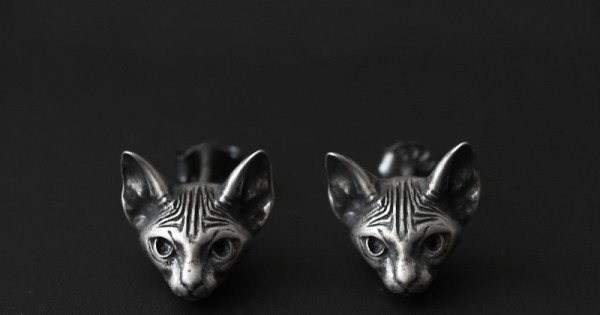
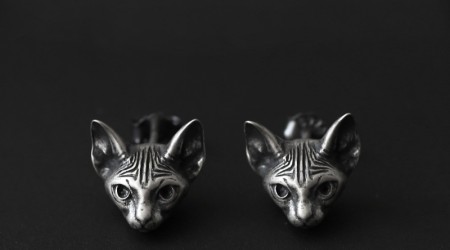
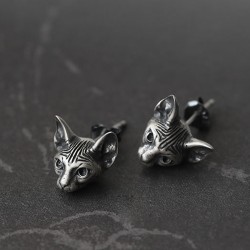
The live listing for 925 sterling silver Sphynx cat stud earrings provides a bounded example. It verifies model SED-04, 925 sterling silver, a coordinated pair and a polished cat-face design with darkened detail. It does not publish a waterproof rating, dimensions, weight, or a separate alloy statement for the posts and backs. Those fields remain unknown.
For this product, a buyer should not infer shower suitability from the 925 label alone. The cautious choice is to remove the pair, preserve the intended contrast, keep the backs dry and follow any seller-specific care update. The same evidence rule applies while browsing the wider sterling silver earring collection: use the individual product record as the specification, not the category label.
What the evidence supports—and what it does not
Supported: sterling is a fineness term; sulfur gases create silver tarnish; humidity can accelerate that process; hard water can leave mineral film; chemical and pool exposure can damage or discolor jewelry; and mixed constructions require component-specific care.
Not supported: a universal number of showers before tarnish, a guarantee that every tap-water system is jewelry-safe, or a claim that one accidental splash proves an earring is damaged. The correct recommendation is risk management: remove earrings before showering, verify construction, dry accidental exposure promptly, and minimize unnecessary polishing.
For the underlying chemistry, read why silver earrings tarnish and how sulfur differs from intentional oxidation. Before buying, use the sterling-silver product-page disclosure checklist to identify unknown materials and care claims.
Conclusion
You can recover safely from occasional water contact, but routine showering is an avoidable exposure with no universal upside for the jewelry. Removing sterling-silver earrings first is the simplest evidence-aligned practice because it reduces humidity, residue and mixed-component uncertainty. If they get wet, assess the construction, clean only as the product permits, dry every part and store the pair in a dry environment.
References
- Electronic Code of Federal Regulations — 16 CFR §23.5, silver-content representations
- Canadian Conservation Institute — Understanding how silver objects tarnish
- Canadian Conservation Institute — Caring for metal objects
- Canadian Conservation Institute Note 9/7 — Silver: Care and Tarnish Removal
- U.S. Geological Survey — Hardness of Water
- U.S. Environmental Protection Agency — Chloramines in Drinking Water
- Gemological Institute of America — Tips on Caring for Jewelry
Related Products
Leave a comment