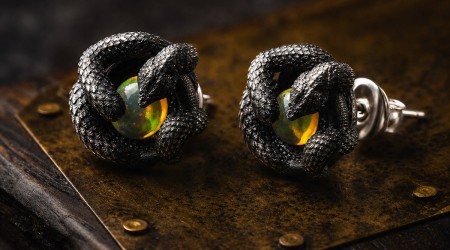
Direct answer: clean opal earrings with a small amount of warm--not hot--soapy water and a soft, non-abrasive cloth. Work briefly, keep the earring over a padded surface, rinse or wipe away soap conservatively, and dry it completely. Do not use an ultrasonic cleaner, steam cleaner, boiling water, bleach, ammonia, strong alkalis, silver dip or abrasive silver polish unless a qualified jeweller who has examined the entire piece specifies otherwise. The safest method is controlled because an opal earring is not only an opal: it is a gem, a setting, a post, a back and often a deliberately finished silver surface.
This guide explains the evidence behind that answer, the questions that must be resolved before cleaning, and the limits of home care. It does not diagnose an opal's origin or treatment from a photograph. It also does not assume that every opal is solid, every setting is sterling silver, or every dark silver recess is unwanted tarnish.
Why opal earrings need a different cleaning decision
Opal is hydrated silica rather than a crystalline gemstone such as quartz or corundum. Geoscience Australia describes opal as silica with water between its tiny spheres and gives a Mohs hardness of about 5.5-6. The Gemological Institute of America's opal care guide gives a broader hardness range of 5-6.5 and rates toughness from very poor to fair. Hardness concerns scratching; toughness concerns resistance to breaking. Neither number means that an opal automatically fails in normal wear, but both explain why a gentle process is appropriate.
Water content is real, but it is not a licence for universal "rehydration" recipes. The Smithsonian National Museum of Natural History notes that water can make up a meaningful portion of opal and that heat can dry some specimens and contribute to cracking. A peer-reviewed RSC Advances study of differently coloured opals found that water amount and distribution varied among the samples. The practical conclusion is restraint: avoid sudden heat and do not invent a moisture treatment for an unidentified stone.
The construction matters just as much. Geoscience Australia distinguishes solid opals from doublets and triplets assembled with backing, caps and adhesive. GIA also notes that opal may be impregnated or surface treated. A method tolerated by one solid opal may be inappropriate for a composite, coated or filled stone. The U.S. Federal Trade Commission's guidance on gemstone marketing explains why treatments that require special care should be disclosed; if you do not know what you own, treat that uncertainty as a reason to use the least aggressive method or seek an examination.
First identify what you can--and cannot--confirm
Before water touches the earring, read the seller's description, invoice, laboratory report or care card. Look for answers to five questions:
- Is the opal described as solid, doublet, triplet, matrix, treated or synthetic?
- What metal is the setting? Sterling silver, fine silver, gold, brass, plating and mixed-metal construction do not all respond identically.
- Is the dark surface intentional? Oxidized silver is often designed to remain dark in recesses.
- How is the stone held? Prongs, bezel walls, adhesive and mixed methods create different inspection points.
- Is anything loose, cracked, cloudy, lifting or discoloured? If yes, stop before home cleaning.
Marketing names alone are not enough to prove origin, structure or treatment. The CIBJO Gemstone Blue Book provides industry nomenclature for natural, treated and composite gemstone materials. Its value for an owner is conceptual: precise construction words change the care decision. If the product record merely says "opal" and the care stakes are high, ask the seller or an independent gemmologist rather than guessing.
A cleaning-risk table for opal earrings
| Method or material | Default decision | Reason and limit |
|---|---|---|
| Warm soapy water and a soft cloth | Preferred conservative method | Recommended by GIA for opal. Keep contact brief and dry the entire setting. |
| Long soaking | Avoid when construction is unknown | Doublets, triplets, adhesive-set stones and mixed materials introduce risks not present in a verified solid opal. |
| Ultrasonic cleaner | Do not use | GIA lists opal among gems vulnerable to heat and temperature change; vibration can also affect insecure settings. |
| Steam cleaner or boiling water | Do not use | High heat and sudden temperature changes can fracture opal. |
| Silver dip, bleach, ammonia or caustic cleaner | Do not use without case-specific professional direction | The opal, treatment, adhesive, inlay and designed silver finish may respond differently. |
| Abrasive silver polish | Keep away from the stone and intentional oxidation | Polish removes surface material and can flatten texture or brighten designed dark recesses. |
| Oil, glycerine or "rehydration" soak | Do not improvise | Opal types and treatments vary; adding a substance can alter appearance or complicate later examination. |
Step-by-step: a conservative home method
1. Prepare a low-risk workspace
Close the drain. Cover the work surface with a clean, light-coloured towel so a dropped back or small stud cannot bounce away. Use two small containers rather than holding the earring under a strong tap. Gather a soft lint-free cloth, a very soft brush reserved for jewellery, mild soap and clean warm water. Do not mix household cleaning products.
2. Inspect dry, before cleaning
Use bright, diffuse light. Check the opal edge, the junction between stone and setting, the post, the back and any soldered or hinged area. Do not push a stone to "test" it. Instead, look for a changed gap, lifted layer, visible adhesive line, crack, missing prong or movement that occurs without pressure. Photograph the piece before cleaning if you need a comparison.
3. Start with the least intervention
Remove loose dust with the soft dry cloth. If that is sufficient, stop. Cleaning should answer a real need, not follow a calendar. For ordinary skin oils or light residue, dampen the cloth with warm soapy water and wipe the accessible surfaces. Do not scrub the opal with pressure. A very soft brush may be used lightly around an intact metal setting, but keep the motion controlled and away from an uncertain adhesive line.
4. Control water contact
For a verified solid opal in a mechanically sound setting, GIA's warm-soapy-water guidance supports gentle washing. For a doublet, triplet, glued setting or unknown construction, prefer a damp-cloth method rather than immersion. This is a precaution based on assembly, not a claim that every brief contact with water causes failure.
5. Remove soap and dry completely
Soap residue can attract dirt and make an opal look dull. Use a second clean damp cloth to remove it, then blot dry. Pay attention to the underside of the setting, the post and the earring back. Let the piece finish air-drying on the towel in a stable indoor location--away from direct sun, heaters and hair dryers--before returning it to storage.
6. Inspect again
Compare the stone and setting with the pre-clean photograph. Check that the back fits securely and that no gap has appeared around the opal. If the stone is loose, the appearance changed unexpectedly, or residue remains in an inaccessible area, stop and arrange professional cleaning.
Why ultrasonic and steam cleaning are poor defaults
An ultrasonic machine creates high-frequency vibrations in liquid and commonly generates heat. It can be effective for some robust jewellery, but effectiveness is not the same as universal safety. GIA's detailed article on gems and ultrasonic cleaners specifically identifies opal as susceptible to heat and temperature changes. It also warns that vibration can loosen stones or damage gems when setting conditions are unfavourable.
Steam adds another uncontrolled variable: concentrated heat. GIA states that high heat and sudden temperature changes can fracture opal. A home owner usually cannot verify internal stress, treatment or assembly quality before pressing a machine button. That uncertainty makes warm soapy water and manual control the more defensible default.
How silver settings change the care plan
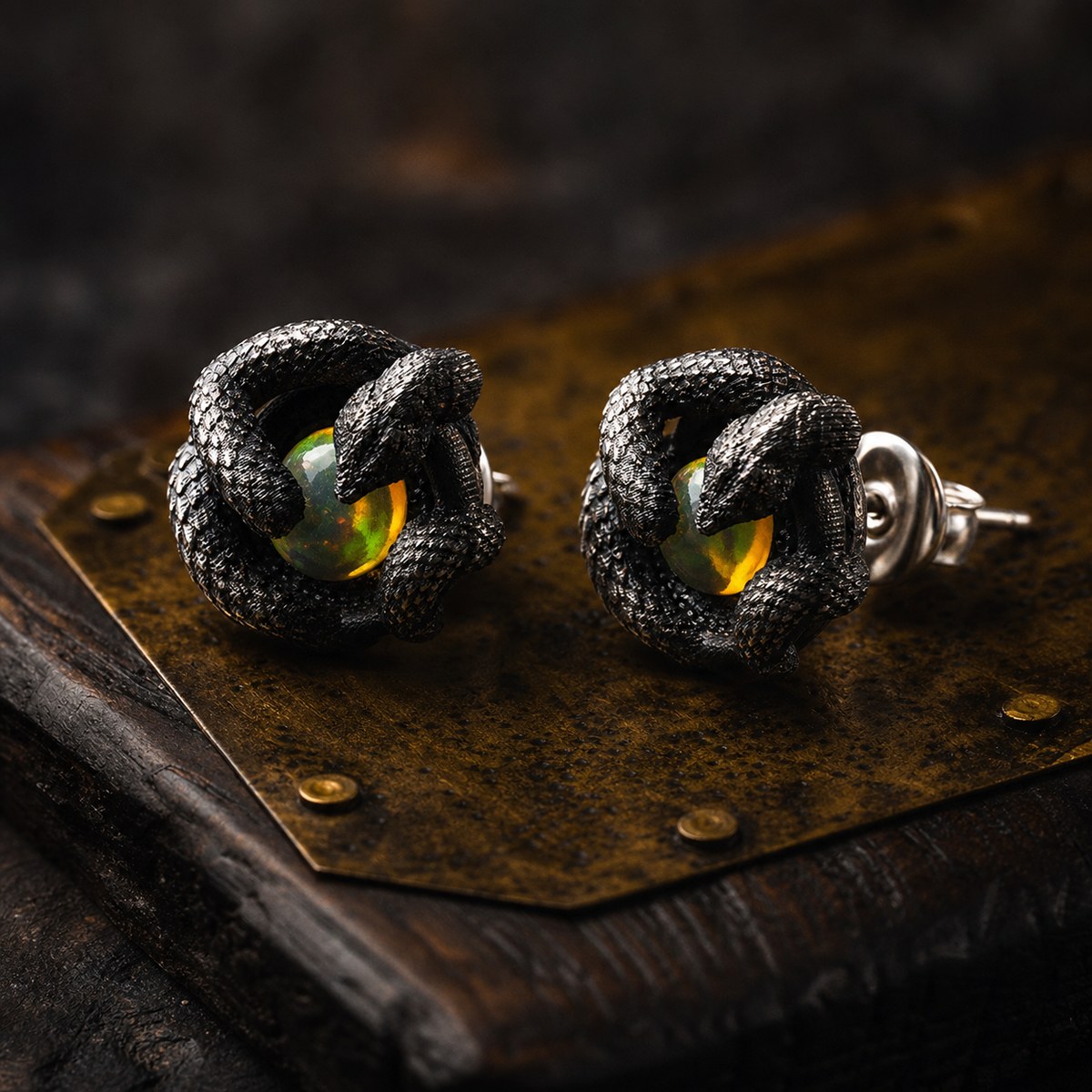
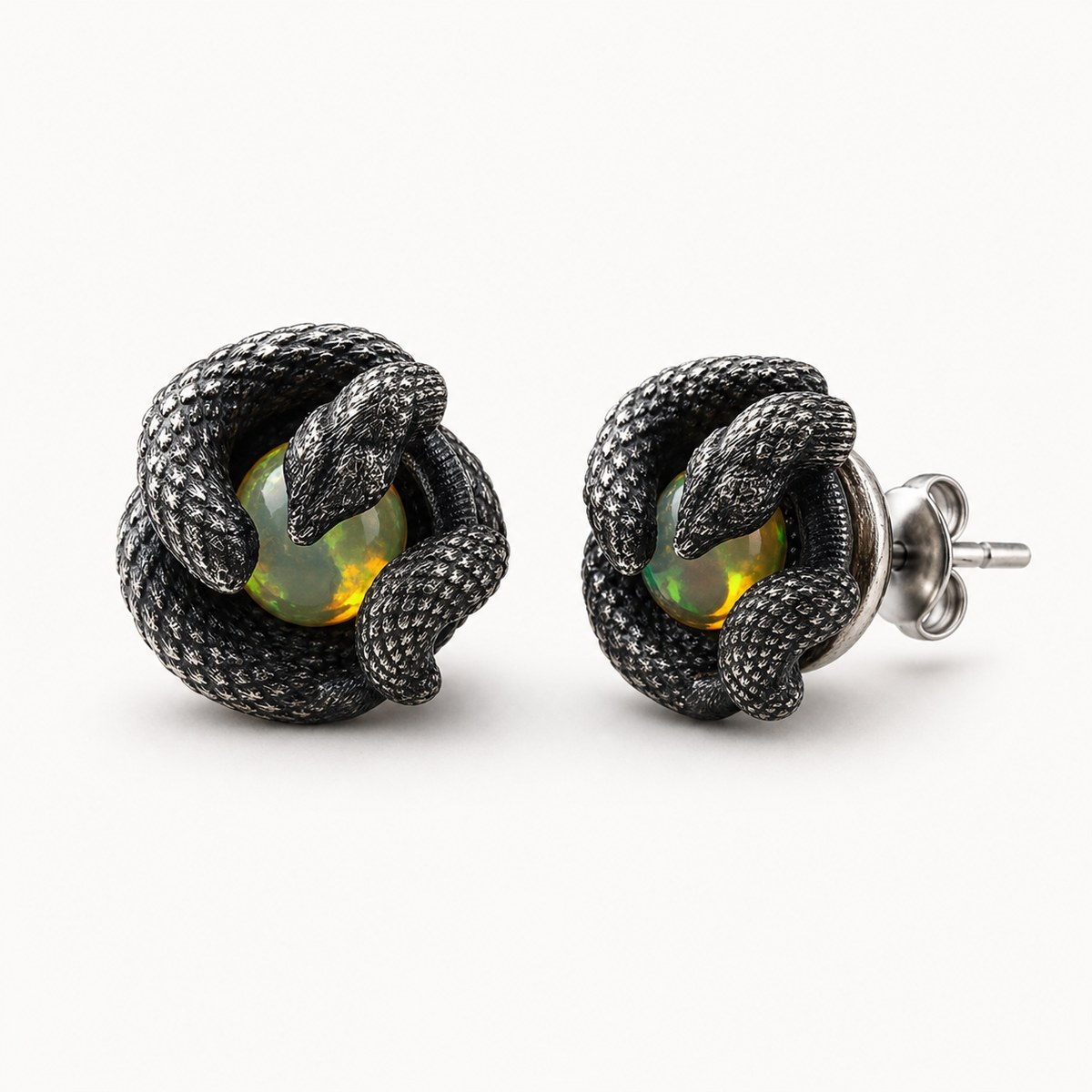
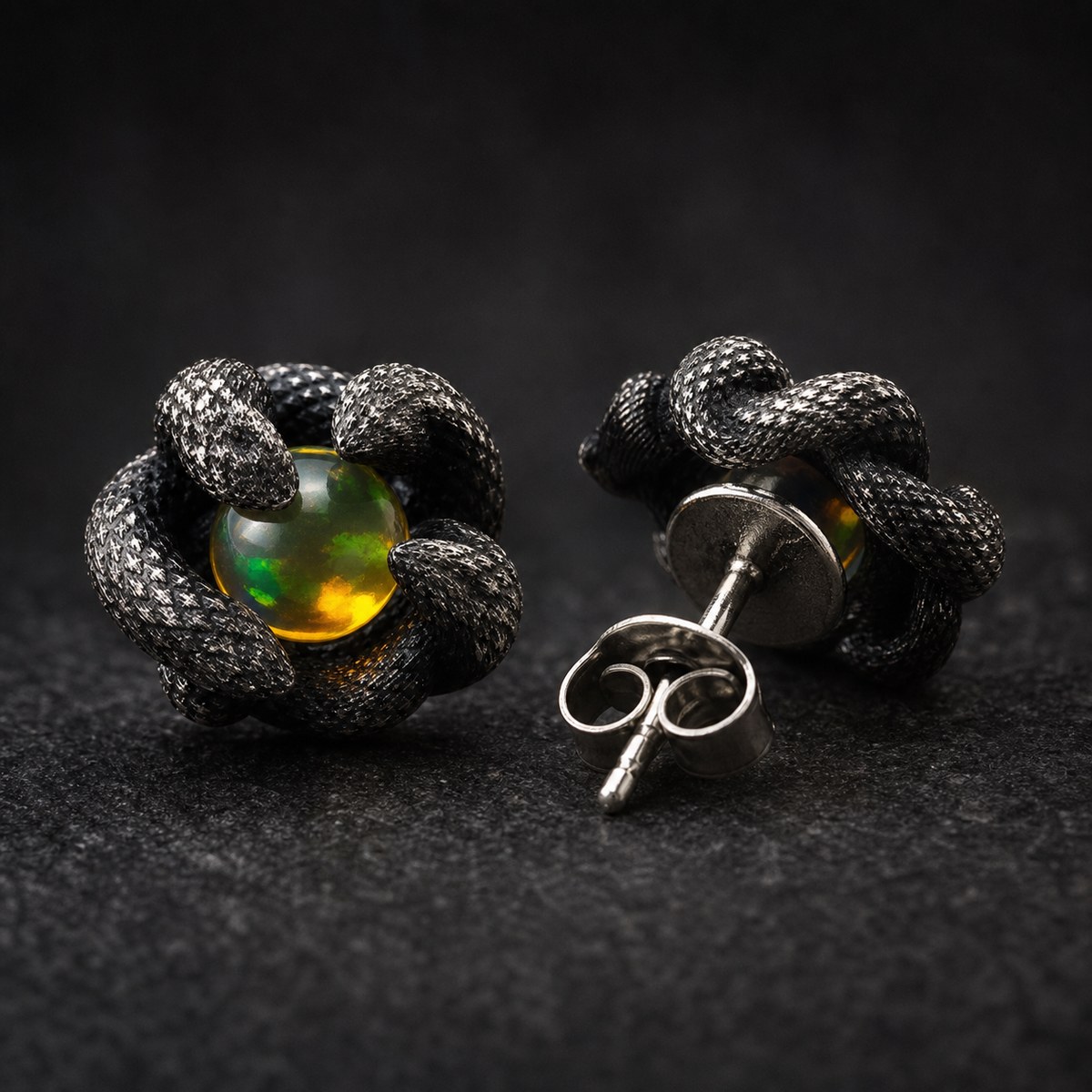
The Skullearring natural-opal snake stud is described as a natural opal held within an oxidized silver serpent design and sold as a single earring or pair. It is a useful example because the desired appearance includes a dark silver finish. Aggressive silver polish could change the contrast that defines the design even if the opal survived the process.
Begin with the product-specific instructions. If the setting is oxidized, read the oxidized silver care guide before polishing. If the question is what happens after cleaning, use the separate sterling-silver earring storage guide. Separating cleaning from storage prevents one oversized "hack" from being applied to two different problems.
Water myths: what the evidence does and does not prove
Myth: because opal contains water, it should be stored in water. The fact that opal is hydrated silica does not establish a universal household soaking protocol. Natural specimens vary in structure and water content, as both the Smithsonian and the RSC study show. Jewellery may also be composite or adhesive assembled. Stable temperature, protection from impact and construction-aware care are more defensible than an improvised jar of water.
Myth: any contact with water ruins opal. GIA recommends warm soapy water, so brief controlled cleaning is not automatically harmful to an appropriate piece. The concern is not "water" as a single category; it is the combination of opal type, treatment, assembly, duration, temperature and drying.
Myth: oil restores a dull opal. Dullness can come from surface residue, scratches, treatment change, a composite layer, setting problems or optical conditions. GIA notes that some opals are treated with oil, wax or plastic, but that does not make household oil an approved repair. Adding oil may mask a symptom and complicate identification.
When home cleaning is inappropriate
Choose a qualified jeweller or gemmologist when the earring has a loose stone, visible crack, lifting doublet/triplet layer, unknown adhesive, valuable provenance, significant scratches, a bent post, damaged prong, persistent odour from an inaccessible cavity, or an appearance change that cleaning does not explain. Professional care is also appropriate when the seller's material description conflicts with the observed construction.
A laboratory report may be useful when identification or treatment materially affects value or care. The FTC's jewellery resources emphasize accurate description and relevant treatment disclosure. They do not turn every owner into a gemmologist; they support asking for precise information.
A 60-second decision framework
- Known solid opal, sound setting, ordinary residue: brief warm soapy water, soft cloth, thorough drying.
- Doublet, triplet, adhesive or unknown construction: damp-cloth cleaning only, or professional advice.
- Loose, cracked, lifting or unusually cloudy: no home cleaning; obtain an examination.
- Oxidized or textured silver: no abrasive polish on the designed finish.
- Machine cleaning proposed: reject ultrasonic and steam as default methods for opal.
For broader material comparison, see 925 versus 999 silver earrings. For exposure questions after cleaning, see showering and swimming with sterling-silver earrings. The complete live range is available in silver earrings and the related snake earrings collection.
Frequently asked questions
Can I use toothpaste on opal earrings?
No. Toothpaste is not a controlled gemstone-care product and can contain abrasives. It may scratch opal, alter metal finishes and lodge around the setting.
Can I use an alcohol wipe on the post?
Do not let an unverified solvent contact the opal, adhesive or finished setting. If hygiene is the concern, follow product-specific instructions and seek professional advice for a method compatible with the complete construction. Cleaning jewellery is not a substitute for medical care of an irritated or infected piercing.
Can solid opal get wet?
GIA's recommended cleaning method uses warm soapy water, so brief controlled contact is compatible with appropriate opal jewellery. That does not justify long soaking, hot water or treating an unidentified doublet, triplet or adhesive-set stone as solid opal.
Why did my opal look different after water contact?
Possible explanations include residue removal, temporary surface moisture, a hydrophane variety, treatment, composite construction or damage. Do not force-dry it with heat. Record the change and ask a qualified gemmologist when it persists.
How often should opal earrings be cleaned?
Clean when residue affects appearance or the post/back requires ordinary maintenance, not by an arbitrary schedule. Frequent aggressive cleaning creates more risk than brief, need-based care.
Sources and review date
- Gemological Institute of America, Opal Care and Cleaning Guide.
- Gemological Institute of America, Gems and Ultrasonic Cleaners.
- Geoscience Australia, Opal.
- Smithsonian National Museum of Natural History, opal GeoGallery records.
- Li, Guo, Wang and Liao, Water characterization and structural attribution of different colored opals, RSC Advances (2022).
- CIBJO, The Gemstone Book.
- U.S. Federal Trade Commission, Jewellery industry guidance and gemstone-treatment disclosure resources.
Reviewed: July 29, 2026. This guide presents conservative household care, not a remote identification or treatment prescription. Recheck the seller's current product instructions and obtain an in-person examination when construction or condition is uncertain.
Leave a comment