MATERIALS & WEAR · EVIDENCE-REVIEWED 21 JULY 2026
Quick answer
A 925 mark describes silver fineness, not a guaranteed nickel-free or hypoallergenic formula. Some people tolerate sterling silver, while others react to alloy metals, surface wear or unrelated piercing problems; new or inflamed piercings need advice from a qualified piercer or clinician.
The short answer: sterling silver earrings can be comfortable for many people with fully healed piercings, but “925” does not guarantee that a finished earring is nickel-free, hypoallergenic or suitable for a new piercing. Silver fineness, the complete alloy, the post and back, surface condition, fit, wear time and the wearer’s own allergy history all matter. If an ear becomes persistently itchy, swollen, painful, hot or weepy, stop treating the problem as a jewelry-shopping question and seek qualified medical or piercing advice.
What does “925 sterling silver” actually prove?
The number 925 is a fineness statement: 925 parts out of 1,000 are silver. The remaining 75 parts are other material added to change hardness, strength, colour or working behaviour. The U.S. Federal Trade Commission explains that an item described as sterling silver should contain at least 925 parts per thousand pure silver. Its Jewelry Guides also require marketers to describe metallic content and other material qualities truthfully.
That is useful information, but it is not a complete ingredient list. A 925 mark alone does not identify every alloying element, solder, post, back, coating or repair material in the finished earring. Nor is it a laboratory result for nickel release. Two earrings can both be correctly described as sterling silver and still differ in alloy formulation, fabrication, surface finish and components.
Fine silver marked 999 contains a higher proportion of silver, but the same evidence rule applies: the decorative face, post, solder and closure may not all be identical materials. Fineness is not a substitute for a component-by-component disclosure. Our 925 vs 999 silver guide explains the mechanical trade-off between a stronger sterling alloy and softer fine silver without turning either number into a medical promise.
| Label or observation | What it supports | What it does not prove |
|---|---|---|
| 925 / sterling silver | The item is represented as at least 92.5% silver under the applicable fineness description. | The identity of every remaining metal; zero nickel release; suitability for every wearer. |
| 999 / fine silver | A higher stated silver fineness and a generally softer silver material. | That posts, backs, solder and inlay are all 999; that irritation cannot occur. |
| “Nickel-free” | A supplier claim that should be supported by composition or testing documentation. | That no other allergen or source of irritation exists. |
| “Hypoallergenic” | A marketing term suggesting reduced allergy potential. | A universal medical guarantee or a diagnosis of what caused a previous reaction. |
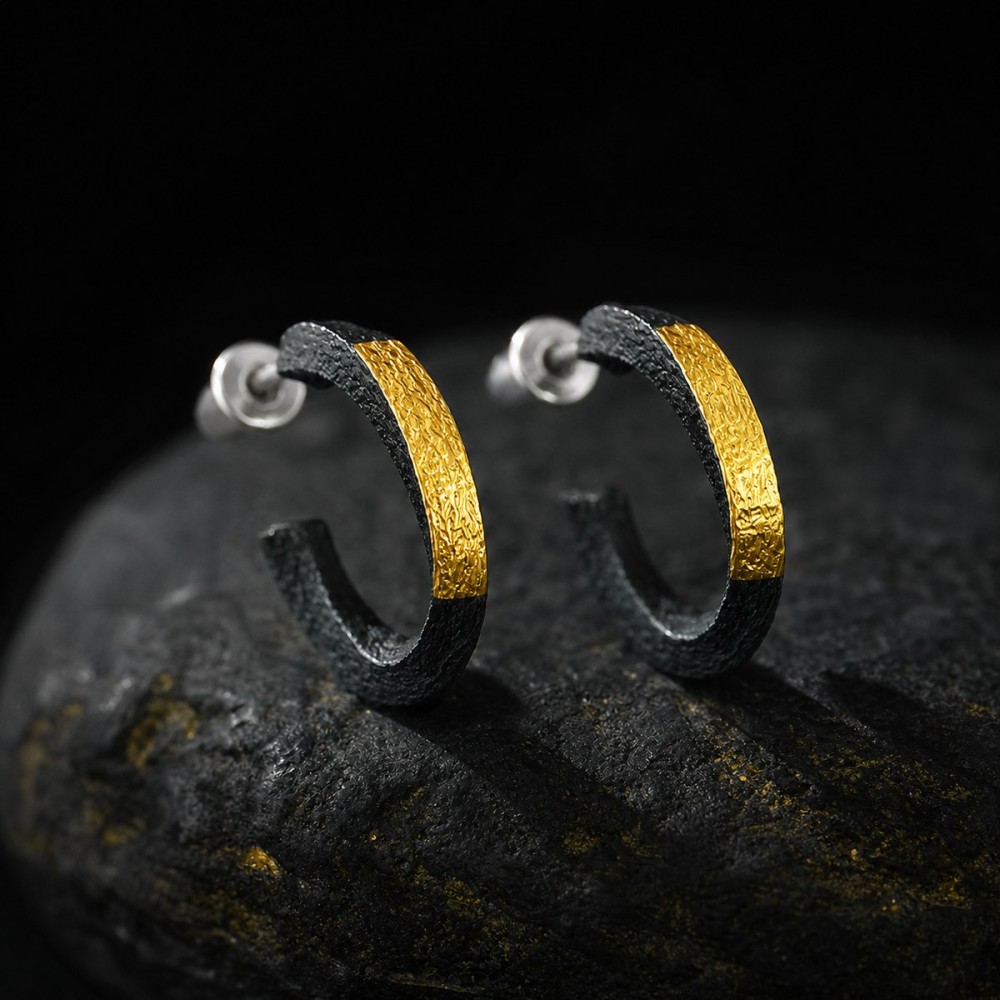
| Darkened or black silver | Possible tarnish, intentional oxidation or surface contamination. | Proof of allergy, infection or counterfeit silver. |
Why nickel receives so much attention
The American Academy of Dermatology identifies nickel as one of the most common causes of allergic contact dermatitis and notes that earrings and earring backs are frequent sources of exposure. An allergic response can include itching, rash and irritation after skin contact. The important variable is not simply whether the word “silver” appears on a product page; it is whether a sensitised person contacts enough of a relevant allergen from any part of the finished piece.
European regulation makes the same distinction through release rather than a casual “contains/does not contain” slogan. European Chemicals Agency guidance for the REACH nickel restriction addresses articles in direct and prolonged skin contact, explicitly including earrings. It describes nickel-release limits for those articles and a stricter limit for post assemblies inserted into pierced parts of the body. That regulatory approach is useful for buyers everywhere because it shows why total metal identity and real-world release are different questions.
A 2025 Scientific Reports retrospective study of 1,085 patients seen at a Japanese university hospital’s dental metal-allergy clinic found that people reporting pierced-earring inflammation had a higher prevalence of positive metal patch tests than those without that history. The result does not tell us that earrings caused every allergy, and a referral-clinic sample should not be treated as the general population. It does reinforce a cautious point: repeated inflammation deserves investigation rather than another unsupported “sensitive ears” label.
New piercing and healed piercing are different decisions
A fresh piercing is a healing wound. Jewelry that may be acceptable for a long-healed lobe is not automatically appropriate as initial jewelry. The Association of Professional Piercers advises that initial jewelry must have suitable size, gauge, style, material and surface quality, and it lists documented implant-standard materials and other specifically qualified options. Sterling silver is not on its recommended list for fresh piercings.
This is not an insult to silver jewelry. It is a boundary between two uses. Initial jewelry must accommodate swelling, allow cleaning, avoid rough surfaces and be traceable to a material standard appropriate for prolonged internal tissue contact. A decorative sterling-silver stud purchased online is ordinarily designed for a healed piercing, not to perform as sterile initial body jewelry.
If your piercing is new, still crusting, tender, swollen or not fully stable, keep the initial jewelry decision with a reputable professional piercer. Do not swap jewelry simply because another metal is advertised as “pure,” “natural” or “hypoallergenic.” Fit and surface finish matter alongside material.
Four problems that people often call “sensitivity”
1. Allergic contact dermatitis
This is an immune response to an allergen such as nickel. Itching and rash are common clues, but only a qualified clinician can diagnose the cause. The American Academy of Dermatology describes patch testing as one tool dermatologists may use when contact dermatitis is suspected.
2. Irritant contact dermatitis
Friction, trapped moisture, soap, cosmetics or repeated cleaning can irritate skin without a true metal allergy. An overly tight back can hold moisture and pressure against the lobe; a rough post can add mechanical irritation. Changing materials without correcting fit or cleaning habits may not solve the problem.
3. Infection or piercing complication
Increasing pain, heat, marked swelling, spreading redness, pus or systemic illness should not be self-diagnosed as “cheap metal.” Seek prompt medical guidance. Removing jewelry at the wrong time can sometimes complicate drainage, so follow qualified advice rather than an internet cleaning recipe.
4. Tarnish or intentional oxidation
Silver darkening is a surface chemistry issue, not by itself a skin diagnosis. The Canadian Conservation Institute explains that silver is vulnerable to corrosion and that humidity, sulfur-containing pollutants, dust, fingerprints, salts and fatty acids can contribute to surface change. Intentional oxidation is also used to create dark recesses in a design. Follow the oxidized silver care guide before polishing a deliberately dark finish.
A practical evidence ladder for buying earrings
When sensitivity matters, treat product information as a ladder. Each step adds useful evidence; none removes the role of your own history.
- Confirm the stated silver fineness. Look for a clear 925 or 999 description, not simply “silver colour.” Browse the silver earrings collection by disclosed material.
- Ask about every skin-contact component. The post, wire, hinge, back and solder may matter more than the decorative face. A large silver motif does not answer what passes through the piercing.
- Look for a supported nickel statement. “Nickel-free” is stronger when backed by supplier specifications or recognised release testing. A fineness mark alone is not that evidence.
- Check surface and construction. Posts should be smooth, ends should not have burrs, and stone settings should be secure. The APP’s initial-jewelry guidance explains why roughness and poor fit can repeatedly traumatise tissue.
- Match the jewelry to piercing status. Decorative silver earrings belong in healed piercings unless a qualified piercer advises otherwise.
- Start with limited wear if your history is uncertain. Do not use an irritated or healing piercing as a test site. Stop if symptoms develop and document which component contacted the skin.
- Preserve return information. A clear returns policy matters when a material or fit is unsuitable.
How design changes the wear decision
Material is only one part of comfort. A compact stud places most of its mass close to the lobe. A hoop moves more, and its hinge or wire may become the primary contact point. A sculptural stud can project forward, increasing leverage even when its total weight is modest. Buyers should inspect front, side and back photographs rather than judging from one macro image.
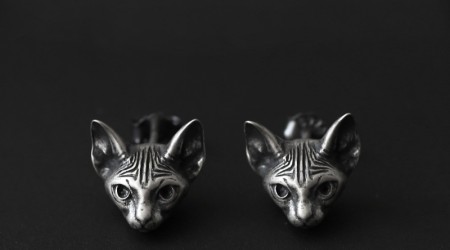
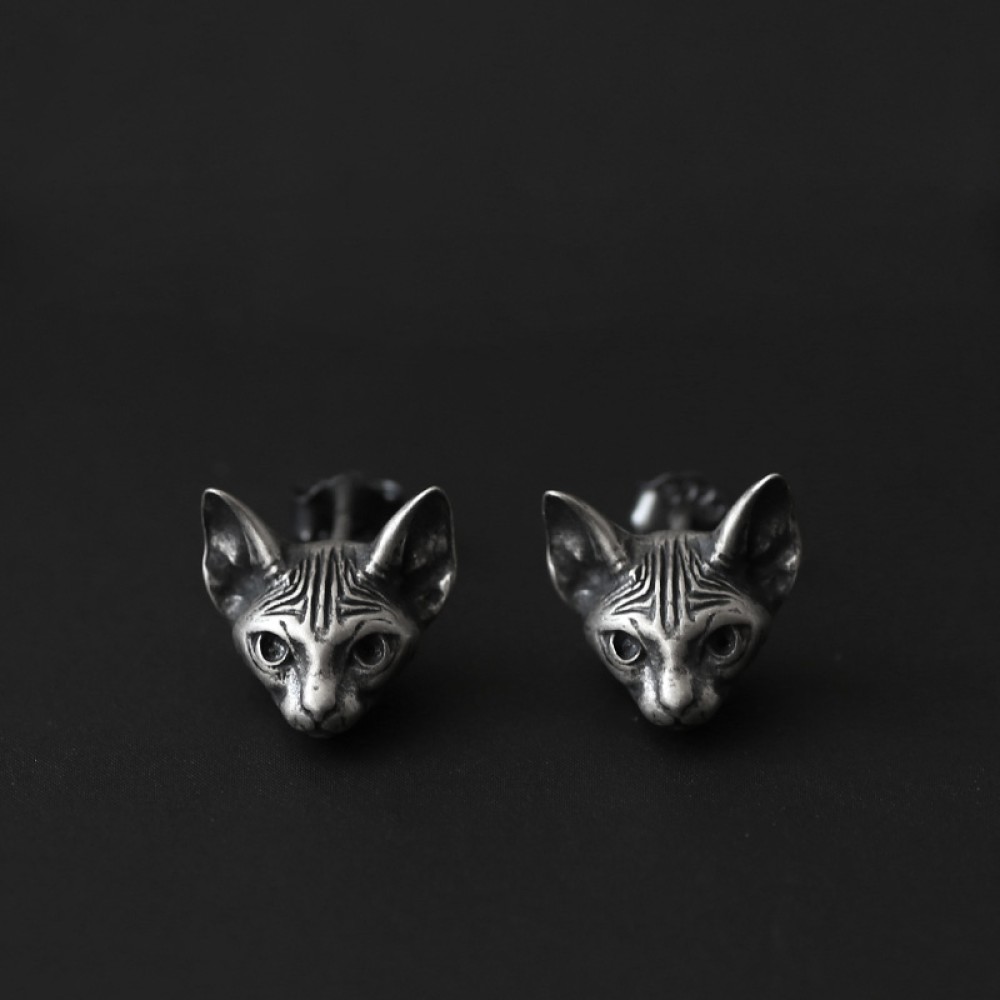
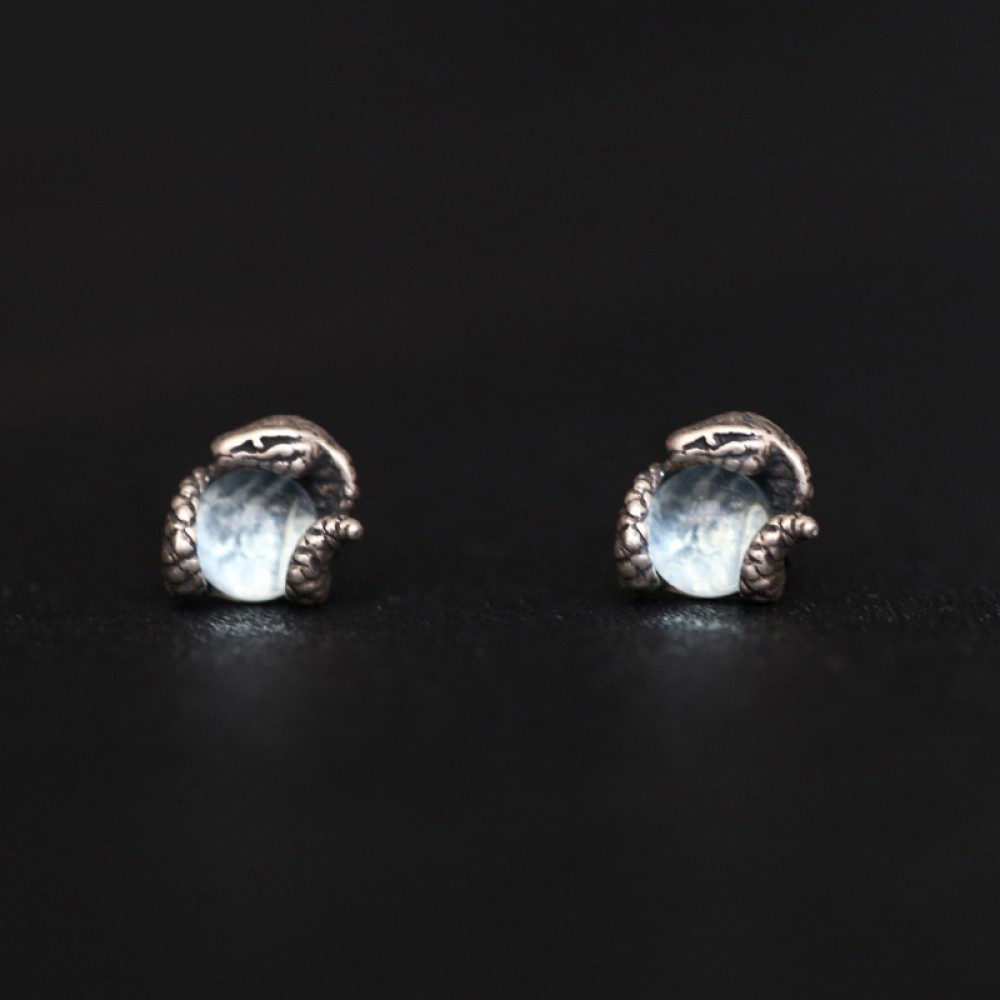
For example, the 925 silver cat studs are close-to-lobe sculptural forms. The oxidized fine-silver Mobius hoop is sold as one earring or a pair and uses a moving hoop format. The blue-topaz snake studs add a stone setting and a more dimensional profile. These observations help compare movement and geometry; they do not rank medical safety.
A seven-day observation record
If a piercing is fully healed and you are trying a new pair, a simple record is more useful than relying on memory. Note the date, wear duration, which ear, products applied nearby, exercise or water exposure, and any itching, redness, pressure mark or discharge. Photograph a reaction in consistent light. Stop wearing the item if symptoms appear; do not deliberately continue exposure to “prove” an allergy.
This record cannot diagnose the problem, but it can help a dermatologist or piercer separate material exposure from pressure, cosmetics, cleaning products and other variables. It also prevents a common error: changing the metal, backing, soap and wear time simultaneously and then guessing which change mattered.
Frequently asked questions
Is 925 sterling silver hypoallergenic?
Not as a universal guarantee. The mark states silver fineness; it does not disclose every remaining ingredient or component and does not predict an individual immune response. Ask for alloy and component information when nickel sensitivity is known.
Does sterling silver always contain nickel?
No. Many sterling alloys use copper rather than nickel, but “925” alone does not identify the remaining 7.5% or every assembled component. A specific nickel-free or release-compliance statement requires its own support.
Is 999 fine silver better for sensitive ears?
Higher silver fineness reduces the proportion available for other alloying elements, but it does not verify the posts, backs, solder, finish or individual tolerance. Fine silver is also softer, so construction suitability must be considered.
Can I put sterling silver earrings into a new piercing?
Do not assume so. The Association of Professional Piercers does not list sterling silver among its materials for initial piercings. Use professionally selected initial jewelry and wait until healing is complete before changing to decorative silver.
Does blackening mean the earrings caused an allergy?
No. Tarnish and intentional oxidation are surface appearances; allergy is an immune response. They may coexist, but one does not diagnose the other.
What should I do if my ears react?
Stop wearing the suspected item and avoid experimenting on inflamed tissue. Seek a dermatologist for persistent or recurrent rash and a reputable piercer for fit or healing concerns. Seek urgent medical care for severe swelling, spreading redness, significant pain, pus, fever or other systemic symptoms.
Conclusion: choose evidence, not one reassuring word
Sterling silver can be a practical, beautiful earring material for many healed piercings. The responsible answer for sensitive ears, however, is conditional. “925” verifies a fineness claim, not a complete safety profile. Stronger decisions combine material disclosure, component details, nickel evidence, smooth construction, correct fit, piercing status and the wearer’s documented history.
The most trustworthy seller is not the one making the broadest “hypoallergenic” promise. It is the one that states what is known, identifies what is not known and gives the buyer enough detail to make an informed choice.
Related reading: If the concern is a green or blue-green mark rather than itching or swelling, see why earrings can turn skin green and how a transferred metal stain differs from allergy.
Leave a comment