Direct answer: Do not use toothpaste as the default cleaner for silver earrings. Toothpaste is formulated to abrade dental deposits, not to preserve jewellery surfaces. The Canadian Conservation Institute says toothpaste is more abrasive than silver polishes, while GIA warns that toothpaste abrasives can erode metal and scratch some gemstones. A brief scrub may make plain silver look brighter, but “it worked once” is not proof that it was surface-safe.
Quick answer
Toothpaste is not a controlled silver polish. Its abrasives can scratch a polished surface, soften intentional oxidation and damage porous stones, so a mild method matched to the earring’s complete material set is usually safer.
The risk is not identical for every earring. Solid plain sterling, silver plating, deliberate oxidation, gold or brass inlay, soldered components and stone settings require different care. This guide separates what authoritative sources establish from what remains product-specific, then gives a conservative decision process for choosing a safer first step.
Why does toothpaste appear to clean silver?
Silver darkens mainly when sulfur compounds form a thin silver-sulfide film. An abrasive paste can mechanically remove part of that film, so the exposed surface reflects more light. But abrasion does not selectively remove “only dirt.” It can also remove microscopic amounts of silver, plating, a dark design finish or softer material around a setting.
That distinction explains the misleading before-and-after photograph: brightness records a visual change, not the amount of original surface lost. A brighter object is not necessarily a better-preserved object. The same limitation applies when a viral video uses a cotton swab that turns black. That residue can contain tarnish, polishing debris and removed material; its colour does not identify what proportion came from each source.
What evidence says toothpaste is abrasive?
The Canadian Conservation Institute’s silver-care guidance directly states that toothpaste is more abrasive than silver polishes. The same conservation note explains that every mechanical tarnish-removal treatment removes some underlying silver. GIA separately advises against abrasives found in some toothpastes because they may erode jewellery metal and scratch gems.
Peer-reviewed dental-material research is useful for mechanism, not for pretending jewellery and teeth are identical. Profilometry studies show that toothpaste formulations contain different abrasive particles and produce measurable differences in surface roughness or material loss on test substrates. Hydrated-silica concentration, particle properties, dilution, brushing force and contact time all affect the result. Therefore, “toothpaste” is not one reproducible substance.
This evidence supports a narrow conclusion: toothpaste is an engineered abrasive whose effect varies. It does not provide a conversion formula for how much sterling silver any brand will remove. Laboratory dental substrates, brush machines and controlled slurries are not equivalent to an oxidized earring with a solder joint and natural stone. The absence of a jewellery-specific wear number is a reason for caution, not permission to assume zero wear.
Why one successful test proves very little
- The formula may change between brands, versions or countries.
- A scratch can be smaller than the eye detects but still alter reflection or future tarnish behaviour.
- A plated surface may look acceptable until repeated cleaning exposes the base metal.
- Dark material in a recess may be intentional oxidation, not unwanted tarnish.
- A gemstone, adhesive or treatment may be less tolerant than the surrounding silver.
- Pressure, brush stiffness, particle size and cleaning time vary between attempts.
No home spot test can establish universal safety for the rest of the piece. A hidden scratch test still damages that hidden location, and a result on one plain hoop cannot validate the same method for a different alloy, stone or finish.
Risk by earring construction
| Earring type | Why toothpaste is a poor default | Safer first step |
|---|---|---|
| Plain solid silver, bright finish | Abrasive removal is uncontrolled and repeated use removes metal | Soft dry cloth; then maker-approved silver care if needed |
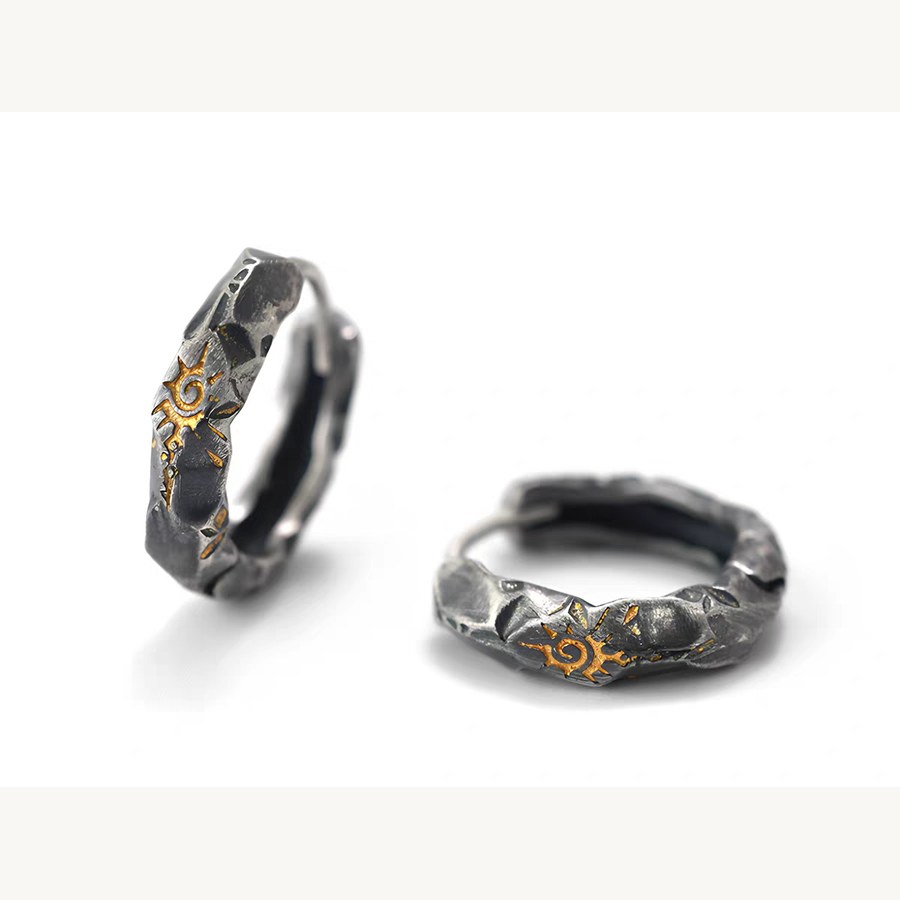
| Oxidized or antiqued silver | Can erase the intentional dark contrast | Preserve the finish; follow finish-specific guidance |
| Silver-plated jewellery | The silver layer may be thin | Avoid aggressive rubbing; ask the maker or jeweller |
| Opal or other delicate stone | Abrasive particles and residues may scratch or lodge around settings | Use stone-specific care; avoid universal immersion |
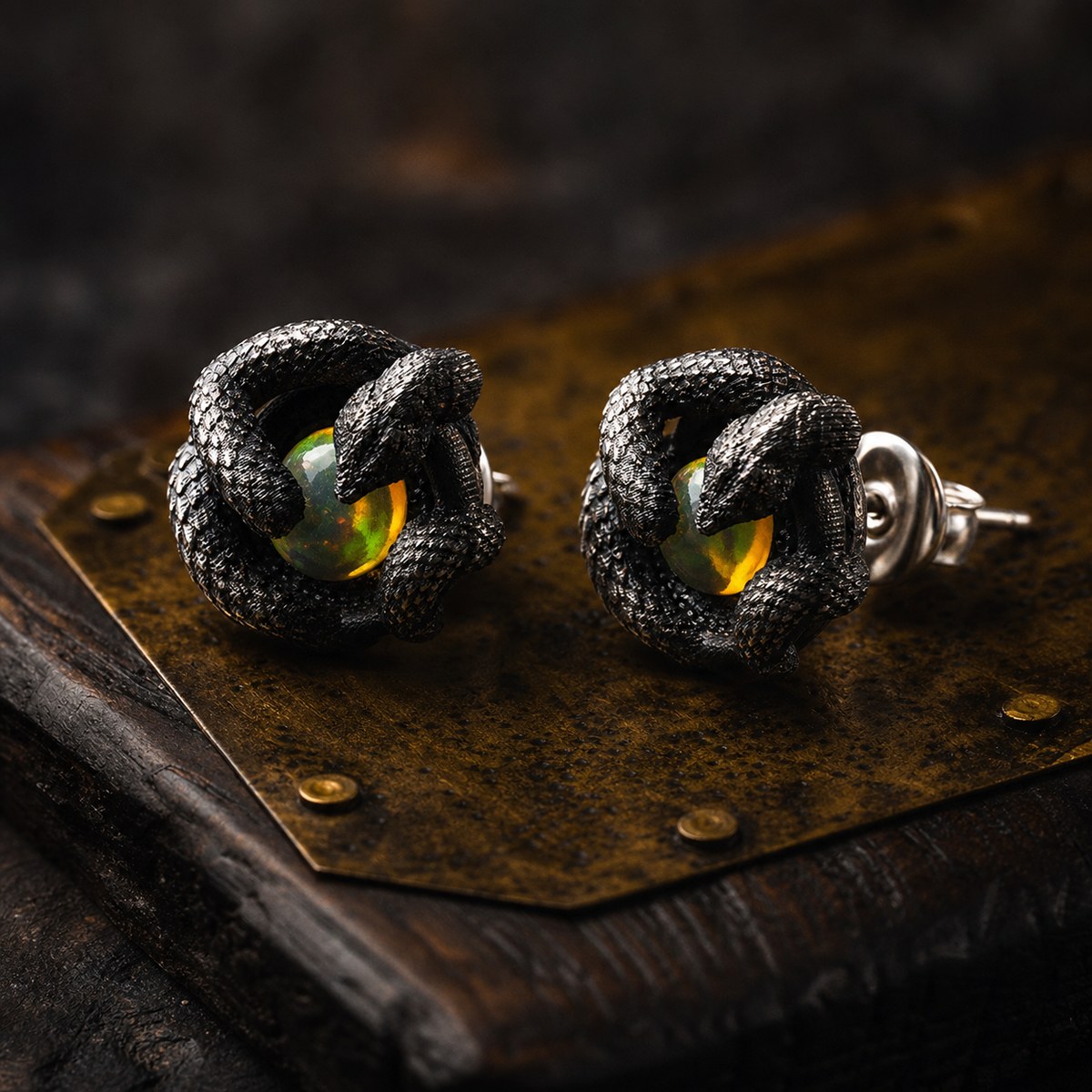
| Gold or brass inlay, mixed finish | Polishing may flatten contrast or alter an inlaid zone | Use the product’s documented care instructions |
| Hinged hoop or soldered stud | Paste and water can lodge at moving parts or joints | Clean locally and conservatively; do not force the mechanism |
First diagnose the problem you are trying to solve
“Dirty” is not a material diagnosis. Separate loose dust, skin oils, dried cosmetics, silver sulfide, intentional oxidation and physical damage before choosing a treatment. Loose dust can often be lifted with a very soft, clean tool or cloth. Oils may respond to a maker-approved gentle cleaning method. Tarnish is a chemical surface film. A loose stone, bent post, opening solder seam or failing hinge is a repair problem, not a cleaning problem.
Use bright, diffuse light and examine both sides. Look around the setting, post, back, hinge and recessed texture. Compare the dark pattern with the product photographs: if darkness consistently follows carved valleys or a designed border, it may be intentional. Photograph the piece before doing anything so that you can distinguish a real change from memory.
Stop if you see movement in a stone, a new gap, flaking plating, a bent post, green corrosion near a mixed-metal joint or a crack. Cleaning can disguise evidence or push residue deeper. A qualified jeweller can assess construction; a conservator may be appropriate for valuable or historic objects.
A conservative six-step alternative
- Read the product description. Identify metal, plating, gemstones, intentional oxidation, inlay and any maker-specific exclusions.
- Remove loose dust first. Use a clean, soft, lint-free cloth with minimal pressure. Do not grind visible particles across a polished face.
- Separate hygiene from tarnish removal. Skin oils or residue and a sulfide film are different surface problems; one method need not solve both.
- Choose the least disruptive confirmed method. Follow the maker’s instructions and do not assume a silver product is safe for its stones, adhesive or finish.
- Work locally. Avoid unnecessary immersion, protect moving parts and do not force paste or liquid into the back of a setting.
- Stop early. If the construction or desired finish is uncertain, professional identification is less costly than irreversible experimentation.
GIA notes that a soft cloth is broadly useful for removing accumulated dust and oils, but even warm water and mild soap have exceptions among porous, treated or delicate gem materials. “Gentle” is not the same as universally safe. Follow stone-specific instructions before introducing water or detergent.
Special warning for oxidized and opal earrings
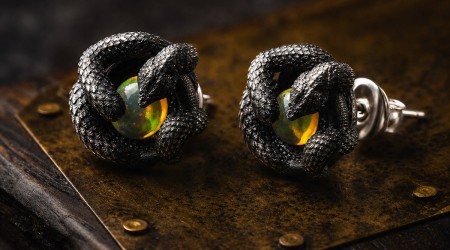
Skullearring’s natural opal snake studs combine an opal setting with a stated oxidized-silver finish. Toothpaste could attack the visual contrast that defines the design and leave abrasive residue around the setting. Use the separate oxidized silver care guide and opal cleaning guide instead.
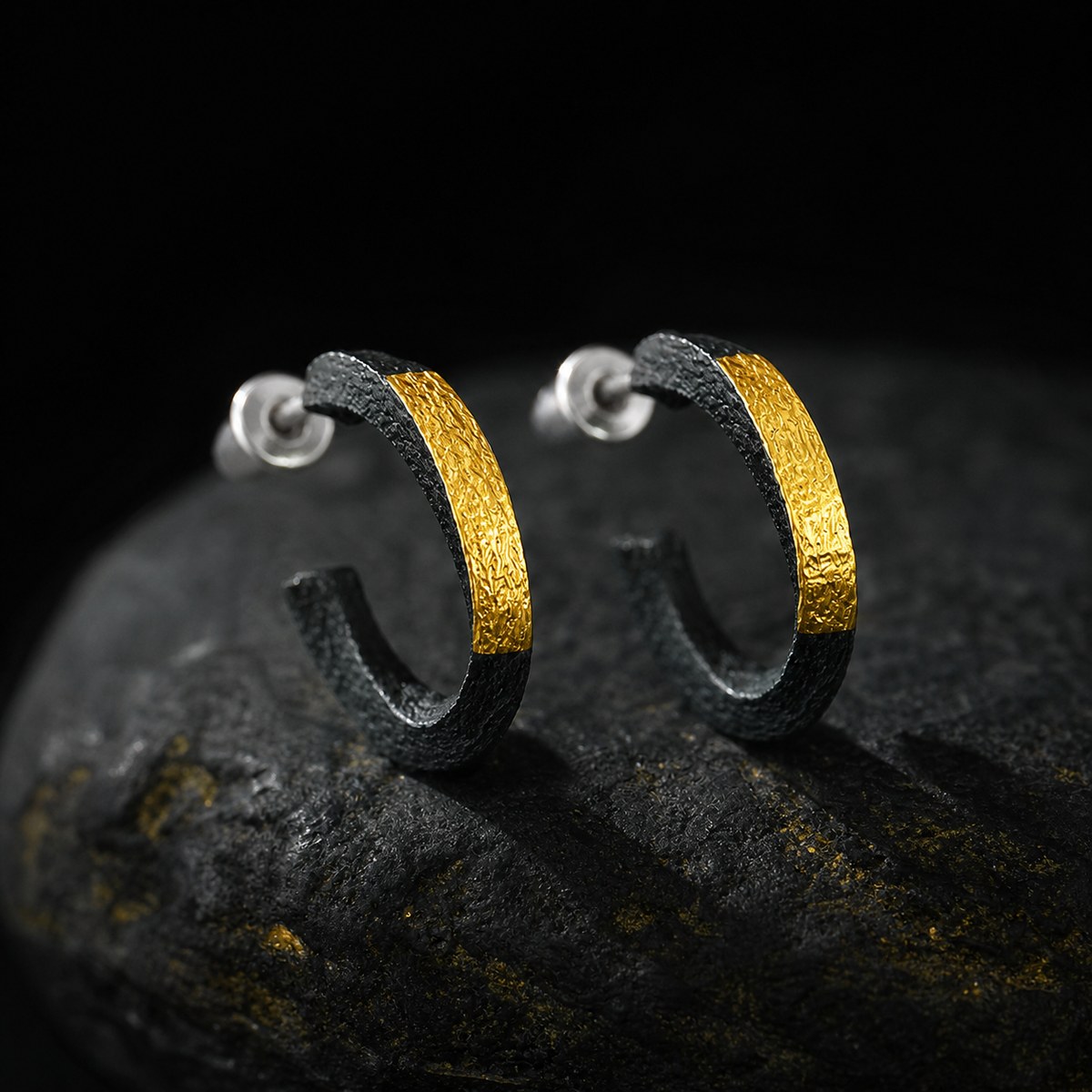
Opal adds another uncertainty. GIA’s care guidance explains that gem materials differ in toughness, stability and treatment sensitivity. Paste can collect at a bezel edge, and a brush can transfer grit across the stone. The correct response depends on whether the opal is solid, assembled, treated or attached with adhesive—facts that cannot be inferred confidently from a front photograph.
What about plain 925 sterling silver?
Plain sterling without stones, plating or intentional oxidation has fewer variables, but toothpaste is still not the controlled first choice. “925” describes silver fineness; it does not make the surface scratch-proof or tell you the toothpaste’s abrasive system. Repeated polishing rounds edges, softens engraving and gradually changes texture even when each individual cleaning seems minor.
If a plain piece truly needs tarnish removal, use a method intended for confirmed sterling silver, follow its instructions and remove as little material as necessary. Avoid treating the entire earring when only one accessible bright area needs attention. Keep polish away from intentional dark recesses and rinse or remove residues only in a way compatible with every component.
Claims the evidence does not support
- “Non-gel toothpaste is always safe.” Formulations and abrasive systems vary.
- “A soft toothbrush prevents abrasion.” The paste itself contains abrasive particles; brush, force and time also matter.
- “If it shines, it is restored.” Shine does not measure metal, plating or finish loss.
- “Baking soda toothpaste is natural, so it is gentle.” Origin does not determine abrasive effect.
- “925 silver is immune to scratches.” A fineness mark does not make a surface abrasion-proof.
- “One cleaning cannot matter.” The effect may be small, but it is uncontrolled and can accumulate.
- “Toothpaste disinfects earrings.” Brightening, cleaning and disinfection are different claims; this evidence does not establish a piercing-safe disinfection process.
Prevention reduces the need to remove surface
For bright pieces in the wider silver earring collection, dry storage, separation from abrasive objects and reduced exposure to sulfur-containing environments can lower the frequency of intervention. Our conservation-informed storage guide covers containment and handling, while why silver earrings tarnish explains the chemistry and why dark colour alone cannot prove purity.
FAQ
Can toothpaste remove tarnish from sterling silver?
It can make some surfaces look brighter by abrasion, but that does not make it a controlled or preservation-safe method. The same action can remove silver, soften texture or damage plating and intentional oxidation.
Is white toothpaste safer than gel toothpaste?
Colour and gel appearance do not provide a reliable abrasivity rating for jewellery. Formulations vary, and no visual category establishes compatibility with a particular stone or finish.
Can I use a soft toothbrush with water only?
A soft brush may help in some maker-approved routines, but settings, adhesives, porous stones and moving parts can impose limits. Do not brush a loose stone or use bristles to force debris deeper into a setting.
What if I already used toothpaste?
Stop further rubbing, remove loose dry residue conservatively and inspect under diffuse light. Do not “correct” the result with another chemical. If paste remains in a setting, the finish changed, a stone moved or a mechanism became stiff, consult a qualified jeweller.
Does a black cloth prove I removed only tarnish?
No. The residue may include sulfide film, polishing material, dirt and microscopic metal. Its colour cannot quantify surface loss.
What is the safest universal cleaner?
There is no universal cleaner for every silver alloy, gemstone, adhesive, plating and finish. Identification comes first; the safest action when facts are missing is to pause.
Bottom line
Toothpaste can brighten silver because it abrades the surface, but that is exactly why it is a poor general-purpose jewellery cleaner. Authoritative conservation and gemological sources favour identifying the construction and choosing the least disruptive, material-specific method. Avoid toothpaste on oxidized, plated, inlaid or stone-set earrings; when the material or finish is uncertain, stop before experimenting.
Leave a comment