
Short answer: peacock feather earrings can represent beauty, confidence, visibility or a personal appreciation of the bird's dramatic design. But there is no single meaning that applies across every culture. Museum evidence connects peacocks with Krishna in some South Asian images, with Karttikeya or Murugan in others, and with naturalistic luxury design in late-19th-century European jewelry. Wearing the motif does not cause luck, healing, protection or prosperity.
First, identify what the earring actually shows
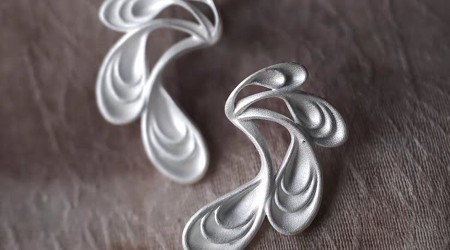
A peacock-feather earring is not necessarily made from a real feather. It may be a metal design that abstracts the shaft, barbs and round “eye” of a male peafowl's train. That distinction matters: the source material, construction and cultural context are separate questions.
The Smithsonian National Museum of Asian Art's peacock guide describes the male's iridescent eyespots and fan display, then states that the bird has different meanings in different cultures. It lists power, strength, confidence and divinity as possible associations—not a universal translation for every object.
Evidence at a glance
| Claim | Evidence | Careful conclusion |
|---|---|---|
| Peacocks always mean one thing | Contradicted by museum guidance | Meaning depends on culture, period, object and wearer. |
| Peacock feathers can be associated with Krishna | Strong for particular South Asian images | Name the image and tradition; do not universalize it. |
| The peacock is associated with Karttikeya or Murugan | Strong iconographic documentation | This is a distinct relationship from Krishna's feather ornament. |
| Peacock feathers became jewelry motifs in Europe | Strong object evidence | Late-19th-century examples document naturalistic design, not one spiritual meaning. |
| Wearing the motif brings luck, protection or healing | No reliable causal evidence | Treat these as beliefs or marketing claims, not established effects. |
What can peacock feather earrings mean today?
A modern wearer may choose a personal meaning without claiming that history gives every earring the same message. Defensible interpretations include:
- Confidence or visibility: the male's display is visually conspicuous, and the Smithsonian includes confidence among possible cultural meanings.
- Beauty and ornament: museum jewelry records show designers using the feather's color and eye-like pattern as a naturalistic decorative form.
- Transformation through design: a jeweler can translate a soft organic feather into metal, texture and line.
- A specific cultural or devotional association: appropriate only when the wearer, maker or object context identifies it.
- Personal memory: a wearer may connect the motif with a place, person or experience. That is personal testimony, not a universal symbol dictionary.
Krishna and the peacock feather: a documented but specific connection
Peacock feathers appear in many depictions of Krishna, but the most reliable way to discuss them is through identified objects. The Metropolitan Museum of Art's record for a West Bengal print, Krishna subduing Kaliya, dates the work to 1885–95 and notes three peacock feathers in Krishna's garland diadem. The museum connects them in that image with peacocks dancing at the coming of the monsoon and the prosperity that follows the rains.
That is meaningful evidence about a particular image and its iconography. It is not evidence that an earring automatically represents Krishna, nor that wearing a peacock feather causes prosperity. A retailer should preserve the difference between an artwork's documented interpretation and a product promise.
Karttikeya, Skanda and Murugan: a different peacock relationship
The peacock also appears as the vehicle or mount of Karttikeya, known by names including Skanda, Kumara and Murugan. The Art Institute of Chicago's 12th-century sculpture of Karttikeya seated on a peacock documents this relationship in a monumental basalt work from Andhra Pradesh.
A 17th-century Thanjavur dagger in The Met provides another carefully bounded example. Its peacock hilt refers to Subrahmanya's mount and depicts the bird holding cobras, an image the museum connects with the deity's role as defender of the gods.
These records should not be blended into the Krishna association. Krishna may be shown wearing peacock feathers; Karttikeya may be shown riding the peacock. Both are documented South Asian contexts, but they are not interchangeable explanations for every modern feather earring.
Peacock feathers in European jewelry and Art Nouveau
Not every peacock jewel is devotional. The Met catalogs a European peacock-feather brooch from the last quarter of the 19th century. The museum describes the rise of naturalistic jewelry motifs and records silver, gold, diamonds, rubies and an emerald arranged to create the feather's eye.
A separate Met record for a peacock-and-flowers belt-buckle design links the motif to Art Nouveau jewelry around 1900. Its curatorial description emphasizes colorful, sinuous animal forms and the movement beyond an exclusive reliance on traditional precious stones.
These objects show how designers used the peacock for line, color and naturalistic impact. They do not prove that every European peacock jewel carried the same symbolic message.
Decorative use is evidence of use—not proof of one meaning
The peacock motif also appears outside jewelry. The Cleveland Museum of Art's 17th-century northern Indian silk border documents a woven peacock design. This helps establish the motif's presence in textile decoration, but the catalog record does not assign it a universal meaning.
This is a useful evidence rule: an object can prove that a motif was used in a certain place, period and medium. It cannot, by itself, prove what all viewers believed or what a modern wearer must mean.
What the evidence does not support
No authoritative source reviewed for this guide shows that wearing peacock feather earrings:
- brings luck, wealth or guaranteed prosperity;
- protects against danger, envy or an “evil eye”;
- heals illness or changes physical energy;
- proves confidence, status or religious belief; or
- carries the same meaning in every culture.
The eye-like pattern can invite visual comparison with eye symbols, but resemblance is not historical proof. Likewise, the word “prosperity” in The Met's description of one Krishna image belongs to that monsoon narrative; it is not a tested effect of jewelry.
A five-question framework for interpreting the motif
- Is it a whole peacock or one feather? Different compositions can point to different sources.
- What is the object's place and date? A 12th-century Andhra sculpture and a 19th-century European brooch require different interpretations.
- Does the source name a deity or story? If not, do not add one automatically.
- Is the meaning historical, personal or commercial? Label each type honestly.
- Is anyone promising an effect? Ask for evidence before accepting protection, health, luck or wealth claims.
Applying the framework to a real silver ear climber
Skullearring's peacock feather ear climber in satin 925 sterling silver is a stylized metal feather, not a real feather. Its live product record states approximate dimensions of 30 × 20 mm and an approximate weight of 4 g per earring, with single and pair options. Those are product facts; the meaning remains contextual and personal.
The climber format also affects how the design sits on the ear. Read the practical guide to wearing ear climbers and checking left-right fit before choosing an orientation. For other verified metal designs, browse the silver earrings collection.
For comparison with another motif that changes meaning by place and object, see the evidence-led guide to lotus earrings in documented historical contexts. A different bird-motif comparison is available in the guide to crane earrings and crane imagery.
Limitations
Museum records describe individual objects and curatorial interpretations; they are not a complete survey of every community or period. Meanings can vary among regions, religious traditions, makers, wearers and audiences. This article does not claim that any cited institution endorses Skullearring or its products.
Frequently asked questions
Do peacock feather earrings mean confidence?
They can be chosen as a personal symbol of confidence or visibility. The Smithsonian includes confidence among several possible cultural meanings, while also emphasizing that meanings differ across cultures.
Are peacock feather earrings a Krishna symbol?
Some depictions of Krishna include peacock feathers, and museum records document that iconography. A modern earring is not automatically devotional; the maker, wearer and object context determine whether that association is intended.
What is the connection between the peacock and Murugan?
Murugan, also known as Karttikeya or Skanda, is documented in South Asian art with a peacock vehicle. This is distinct from Krishna's use of peacock feathers as an attribute.
Do peacock feather earrings bring luck or protection?
No reliable evidence shows that wearing the motif causes luck, protection, healing, wealth or prosperity. Those claims should be treated as beliefs or marketing, not established effects.
Conclusion
Peacock feather earrings do not have one universal meaning. They can suggest beauty, confidence or dramatic natural design; in identified South Asian contexts they may relate to Krishna or to Karttikeya/Murugan; in European jewelry history they also appear as naturalistic and Art Nouveau motifs. The most responsible interpretation names the context, separates historical evidence from personal meaning and refuses unsupported promises.
Sources
- Smithsonian National Museum of Asian Art — Peacock
- The Metropolitan Museum of Art — Krishna subduing Kaliya
- Art Institute of Chicago — Karttikeya Seated on a Peacock
- The Metropolitan Museum of Art — Dagger (Katar)
- The Metropolitan Museum of Art — Peacock Feather Brooch
- The Metropolitan Museum of Art — Peacock-and-Flowers Belt Buckle Design
- Cleveland Museum of Art — Border with Peacock Design
Leave a comment