Short answer: an earring can feel too tight because the backing has been pushed too close to the lobe, the wearable post is too short for the tissue, the piercing has swollen, or the skin is reacting to pressure, friction, metal or infection. Those causes are not interchangeable. A comfortable fit leaves the jewelry secure without pinching, sinking into the skin or trapping the lobe between the front and back.
This guide separates a mechanical fit problem from a skin reaction and explains what a product page can—and cannot—tell you. It is not a diagnosis. A new or symptomatic piercing needs more caution than a fully healed lobe wearing an ordinary fashion stud.
Four reasons an earring can feel too tight
| What you notice | Possible explanation | What to check next |
|---|---|---|
| Immediate pinching behind a healed lobe | The clutch or screw back may be pressing too close to the skin. | Whether the back can sit securely with visible clearance and without leaving a deep pressure mark. |
| The front or back seems to sink into the lobe | The wearable post may be too short, or swelling has used up the available space. | Stop forcing the jewelry; assess swelling and whether any part is becoming embedded. |
| Itching, redness, blistering or a persistent dry patch | Allergic contact dermatitis or irritation is possible. | Material at every skin-contact part, timing of symptoms and professional assessment if symptoms persist. |
| Increasing pain, heat, marked swelling, blood or pus | Infection or injury is possible. | Prompt medical advice, especially for cartilage piercings or systemic symptoms. |
The table is a triage framework, not a home diagnostic test. The same earring can produce more than one problem: a short post can create pressure, pressure can aggravate swelling, and an inflamed lobe can make previously comfortable jewelry feel tight.
Backing pressure and post length are different variables
A friction or “butterfly” back grips a post mechanically. The Gemological Institute of America’s bench guidance shows that the spring elements of a clutch and the grooves of a post control that grip. A back can therefore be difficult to slide while still being positioned too close to the lobe. “Secure” describes retention; it does not mean the lobe should be compressed.
Post length is the usable distance between the earring front and its closure. If that distance is shorter than the lobe thickness—or if swelling increases the tissue thickness—the earring can press from both sides. The American Academy of Pediatrics clinical report notes that embedded earrings are associated with contexts including thick, fleshy earlobes and spring-loaded piercing systems, and that appropriate longer posts with adjustable backings may help prevent embedding.
There is no responsible universal answer such as “every adult needs a 6 mm post.” Earlobe thickness, piercing angle, swelling, front and back geometry, and where the post meets the decorative face all affect fit. The useful product specification is a measured wearable length paired with a clear drawing or photograph—not a one-size promise.
New piercing fit is not the same as healed-ear fit
Initial jewelry is deliberately fitted for a healing wound. The Association of Professional Piercers (APP) says its length or diameter must suit the wearer’s anatomy and placement. Jewelry that is too small raises the likelihood of swelling and embedding; jewelry that is too large can catch and move excessively.
The extra room needed early in healing may become excess length after swelling falls. The APP calls the later switch to a shorter post downsizing. It also cautions that a healing piercing may not be ready for the wearer to change jewelry unaided. That means a new piercing that suddenly feels tight should not be treated like a healed lobe with a casually over-pushed butterfly back. A qualified piercer can evaluate fit; infection signs require medical assessment.
Skullearring’s retail earrings are not described as sterile initial-piercing jewelry. For that separate question, read whether sterling silver is suitable for a new piercing.
Tightness, allergy and infection: do not collapse them into one label
Pressure or friction
Pressure tends to match the contact point: a pinch behind the lobe, an indentation, or discomfort that starts soon after fastening. Friction and excess movement can also irritate a piercing. On a healed, symptom-free lobe, stopping wear or repositioning an ordinary adjustable back may resolve a simple fit problem. Do not use pain tolerance as a sizing tool.
Possible metal allergy
DermNet describes nickel allergic contact dermatitis at earlobes as potentially intensely itchy, red and blistered when acute, or dry, thickened and pigmented when chronic. Those features differ from a clean pressure line, but appearance alone cannot identify the metal or prove an allergy. Patch testing is a clinical procedure. If sensitivity is the concern, our evidence review explains what “sterling silver for sensitive ears” can and cannot guarantee.
Possible infection or embedding
The NHS distinguishes some early tenderness and pale crusting from warning signs such as worsening swelling, pain, heat, pronounced colour change, blood or pus, or feeling unwell. It advises leaving jewelry in unless a doctor tells you to remove it. The American Academy of Dermatology likewise advises professional assessment when soreness, puffiness or drainage does not settle quickly.
If skin is growing over the front or back, the hardware is no longer fully visible, the back will not move, or removal causes significant pain or bleeding, do not force or dig for it. An embedded backing may require a clinician to remove it. Cartilage pain and swelling deserve particular urgency because cartilage complications can be more serious than a simple lobe irritation.
A practical check for a healed lobe
- Stop at pain. Do not keep pushing a post through resistance or clamp the back tighter to make the earring look level.
- Look from both sides. Check whether the front or back is indenting the tissue, whether the post remains visible, and whether one ear is more swollen than the other.
- Separate grip from spacing. A clutch must hold the post, but it does not need to press hard against the lobe. Cleveland Clinic summarizes the goal as a backing that is secure but not too tight.
- Check the closure type. Butterfly, screw, locking and flat backs create and control space differently. See our comparison of earring-back types before assuming every back adjusts the same way.
- Check for skin symptoms. Itching, rash, heat, drainage, spreading swelling or persistent pain moves the issue beyond ordinary fit.
- Do not modify valuable hardware casually. GIA’s clutch-adjustment method is a jeweler’s bench procedure. Bending a back or filing a post can weaken it, create rough edges or remove a finish.
What to verify on an earring product page
A useful listing separates the decorative body from the parts that pass through or rest against skin. For a stud, look for:
- post material, not only the material of the visible front;
- backing type and backing material;
- wearable post length and post thickness, ideally with measurement method;
- front dimensions and weight per earring;
- whether the listing is for one earring or a pair;
- any plating, inlay, solder or mixed-metal component;
- whether the item is fashion jewelry for healed piercings or documented initial-piercing jewelry.
Our earring-dimensions guide explains how to distinguish height, width, diameter and wearable measurements. The broader product-page disclosure checklist covers alloy, quantity, finish and evidence limits.
A real catalog example—and what remains unknown
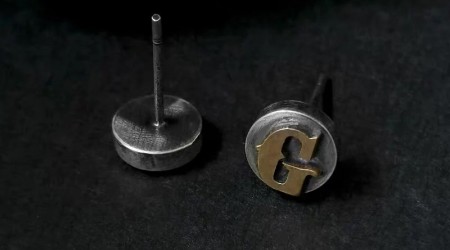
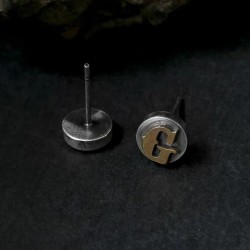
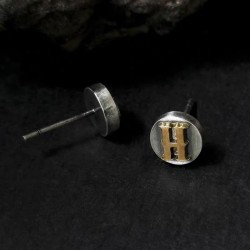
The custom letter stud earrings are described as a silver base with brass character inlay. That verifies a mixed-metal decorative construction. The current product page does not state the silver fineness, post length, post thickness, post material or backing material. Those fields therefore remain unknown; the appearance of the front cannot answer whether the stud will fit a particular lobe.
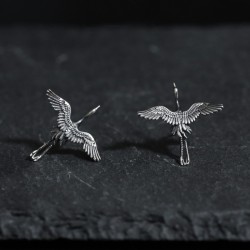
Likewise, the 925 silver crane stud earrings document a sterling-silver design, but the listing does not separately specify wearable post length or backing construction. “925” is a fineness statement about silver content where applied; it is not a universal size or comfort specification.
Bottom line
An earring should be retained without compressing the lobe. On a healed ear, immediate pinching often points to backing position or insufficient wearable length. In a new piercing, tightness may reflect swelling and requires a qualified fit check. Itching and rash raise an allergy question; heat, worsening pain, pus, marked swelling or embedding raise a medical one. The safest buyer decision comes from measured post and backing specifications—not from metal colour, a generic “comfortable” label or a fixed size copied from another person.
Sources
- Association of Professional Piercers — Jewelry for Initial Piercings
- Association of Professional Piercers — Piercing FAQ and downsizing
- American Academy of Pediatrics — Piercing complications clinical report
- American Academy of Dermatology — Caring for new piercings
- DermNet — Nickel allergy
- NHS — Infected piercings
- Cleveland Clinic — Ear piercing care and backing fit
- Gemological Institute of America — Earring-back bench guidance
Editorial method: Skullearring distinguishes verified product specifications from general jewelry guidance and clinical warning signs. This article was reviewed against the linked primary professional and medical sources on 23 August 2026. It does not replace advice from a qualified piercer or healthcare professional.
Related Products
Leave a comment