The first question is not “what does the shell mean?” but what is the object actually made from? A listing may describe an earring made from natural shell, an earring with shell or mother-of-pearl inlay, or a metal earring shaped like a shell. Those are materially different products, even when the title uses the same motif word.
Three Different Things “Shell Earrings” Can Describe
| Listing type | What should be disclosed | What the name does not prove |
|---|---|---|
| Natural-shell earring | Shell species or trade name when known, backing metal, treatment, dimensions and purchase unit | A universal cultural meaning or any health/protective effect |
| Shell inlay or composite | Which part is shell, the surrounding metal, coatings and care limits | That the entire earring is shell or solid precious metal |
| Shell-shaped metal earring | Actual metal, finish, size, weight, orientation and whether sold singly or as a pair | That natural shell is present |
The distinction is practical as well as semantic. Natural shell and sterling silver have different surfaces, care needs and failure modes. The U.S. FTC jewelry industry guidance emphasizes truthful product descriptions and material disclosures; a motif word should never substitute for a clear material statement. Our field-by-field earring product-page checklist explains the other details a buyer should expect.
How Far Back Does Shell Jewelry Go?
The strongest current evidence comes from excavated, dated ornaments—not modern stories projected backward.
At least about 142,000 years: Bizmoune Cave, Morocco
A 2021 Science Advances study documented 33 shells from Bizmoune Cave that researchers identified as personal ornaments. Uranium-series evidence placed part of the relevant sequence at about 142,000 years or older. The paper treats the objects as evidence for early ornament use and discusses their possible role in communicating identity and social information. It does not say that every shell ornament everywhere carried the same message. Read the open-access Bizmoune study.
About 82,000 years: Taforalt, Morocco
A PNAS study of perforated Nassarius gibbosulus shells from Grotte des Pigeons at Taforalt reported wear consistent with suspension and traces of red ochre. The marine shells were recovered roughly 40 km from the Mediterranean coast. That distance and the use-wear matter: they support deliberate selection, transport and display rather than accidental presence. See the original PNAS paper and the Smithsonian Human Origins object summary.
What Do Documented Shell Earrings Show?
Later museum objects can sometimes tell us more about form, place and exchange. The Metropolitan Museum of Art records a pair of shell serpent earrings or earflares from Chiapa de Corzo, dated 450–250 BCE. The Met identifies the medium as shell and notes that the Pacific-coast material travelled far from the place where the objects were found. That supports a specific Mesoamerican story about valued material and exchange; it does not create a universal shell meaning.
Regional histories also differ. The National Museum of the Philippines describes shell ornaments from several Philippine archaeological sites, including ornaments from Duyong Cave dating to about 4,700 years ago and shell bracelets from Leta Leta Cave around 3,500 years ago. The museum record is valuable precisely because it is geographically and historically specific.
What the Evidence Supports—and What It Does Not
| Claim | Evidence level | Responsible conclusion |
|---|---|---|
| Humans have used shells as personal ornaments for a very long time | Strong: excavated objects, use-wear and dating | Supported to at least about 142,000 years |
| Some shells travelled far from their natural source | Strong in named archaeological and museum contexts | Supports selection, movement or exchange in those contexts |
| Ornaments can communicate identity or social information | Professional archaeological interpretation | Plausible and widely used, but not a translation of one fixed symbol |
| All shells mean protection, fertility, wealth or rebirth | Insufficient and culturally overbroad | Do not present as a universal historical fact |
| A shell motif heals, protects or changes energy | No reliable evidence | Not a verified product function |
A Verified Modern Product Example
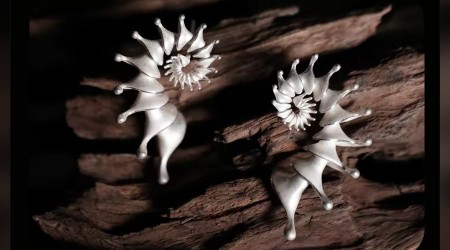
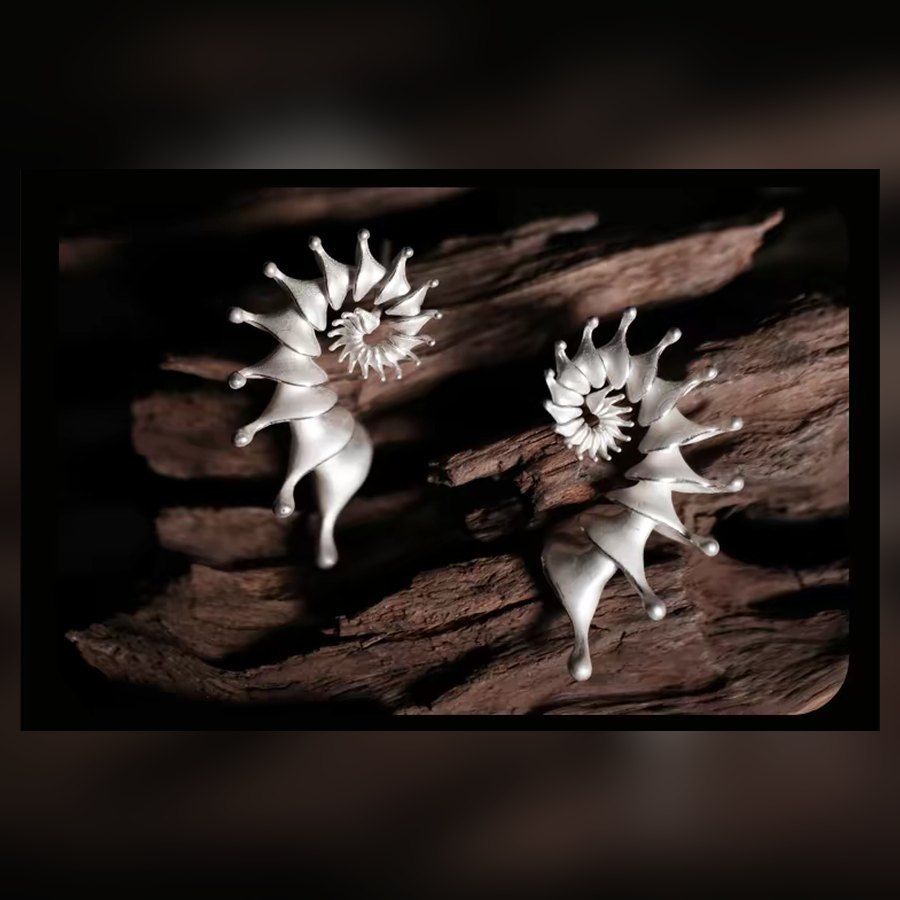
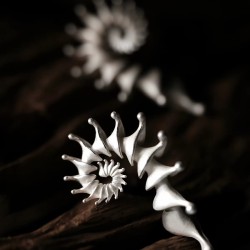
Skullearring’s Spiral Shell Ear Climber uses “shell” as a form description. The live product record verifies:
- 925 sterling silver—not natural shell;
- an expanding spiral with folded, shell-like sections;
- approximately 30 mm high × 20 mm wide;
- about 5 g per earring;
- separate left- and right-oriented versions;
- left single, right single or mirrored-pair purchase options.
Those are verifiable product facts. A wearer may personally associate the spiral with the sea, movement, memory or growth, but that is personal interpretation rather than an archaeological conclusion or product effect.
Because the design is directional, consult our guide to wearing left- and right-oriented ear climbers. To judge scale rather than relying on a close-up photograph, use the earring dimensions guide. A listed weight of about 5 g per earring should also be compared with your usual jewelry and personal comfort; the measurement-based earring weight guide explains the limits of universal weight rules.
How to Evaluate a Shell-Motif Listing
- Read the material field before the story. Confirm whether the object is shell, shell inlay, sterling silver or another metal.
- Check which component the material describes. Posts, backs, inlays and the decorative body may differ; see our guide to which parts of a 925 earring are actually sterling silver.
- Verify the purchase unit. A directional design may be sold as a left single, right single or mirrored pair.
- Compare measurements and weight. Images alone cannot establish scale or comfort.
- Treat symbolism as contextual. Look for a named culture, object and source rather than a universal promise.
For other verified metal forms, browse the sterling silver earring collection. The 925 vs 999 silver guide explains what silver-fineness numbers mean—and what they do not disclose about finish, hardware or accents.
Frequently Asked Questions
Do shell earrings have one universal meaning?
No. Meanings depend on material, period, place, community and the wearer. Archaeology supports long-term use as adornment and, in some contexts, communication of identity; it does not establish one global definition.
Are shell-shaped earrings made from real shell?
Not necessarily. “Shell” may describe a motif. Check the material field and component-level description. The featured Skullearring climber is verified as 925 sterling silver and does not list natural shell.
Were the oldest shell ornaments earrings?
The Bizmoune and Taforalt finds discussed here are beads or personal ornaments. Without evidence of ear wear, calling them earrings would go beyond the archaeological record.
Do shell or spiral earrings provide protection or healing?
No reliable evidence establishes medical, protective, energetic or spiritual effects from wearing a shell or spiral motif. Such language should be treated as belief or personal symbolism, not product performance.
Conclusion
Shell jewelry matters because the evidence is richer than a one-word symbol. Dated ornaments document deep human histories of selection, making, display and social connection; museum objects preserve specific regional stories; modern earrings may use natural shell, shell inlay or only a shell-inspired form. The responsible reading starts with material and context, then leaves room for personal meaning without turning it into universal fact.
References
- Sehasseh et al., Early Middle Stone Age personal ornaments from Bizmoune Cave, Science Advances, 2021.
- Bouzouggar et al., 82,000-year-old shell beads from North Africa, PNAS, 2007.
- Smithsonian Human Origins Program, Ancient Shell Beads.
- The Metropolitan Museum of Art, Pair of Serpent Earrings, Chiapa de Corzo, 450–250 BCE.
- National Museum of the Philippines, Shell Bracelets in Prehistoric Philippines, 2023.
- U.S. Federal Trade Commission, Jewelry industry guidance.
Leave a comment