Short answer: many people can wear a well-specified sterling-silver earring every day in a fully healed piercing, but “925” is not a universal safety or comfort guarantee. Check the post and backing materials, nickel-release evidence, weight, dimensions, closure pressure and finish. A fresh or healing piercing needs different jewelry guidance. Remove the earring if it causes pain, swelling, persistent redness, discharge or an itchy rash, and seek qualified medical or piercing advice when symptoms do not settle.
Everyday Wear Is a Five-Part Question
The metal name is only the first part of the decision. A defensible everyday-wear check asks:
- Is the piercing fully healed? Initial jewelry must support wound healing and should not be treated like ordinary fashion jewelry.
- Which parts touch the body? The decorative face, post, backing, solder, inlay and coating may not all have the same composition.
- Does the complete earring fit without pressure? A tight back, bent post or unsuitable climber angle can create friction even when the metal claim is accurate.
- Is the weight comfortable for this lobe? “Lightweight” is not a regulated universal sensation; per-earring weight and anatomy matter.
- Can the surface be maintained correctly? Moisture, cosmetics, sweat and repeated abrasive cleaning affect ordinary wear and the intended finish.
What Does 925 Sterling Silver Actually Verify?
The Federal Trade Commission explains that a 925 mark means 925 parts per thousand silver. The remaining portion is alloying material. The mark describes fineness; it does not by itself tell you the exact alloy recipe, the nickel-release rate, the post material, the backing material or whether a surface has been plated.
The FTC's broader Jewelry Guides emphasize truthful disclosure of type, metallic content, treatments, durability and serviceability. For daily wear, a useful listing should identify the metal for each relevant component—not merely place “sterling silver” in the title.
| Claim | What it supports | What it cannot prove alone |
|---|---|---|
| 925 sterling silver | Silver fineness of the described part | Every part is 925 or every wearer will tolerate it |
| Nickel-free | A supplier or test claim when scope and method are stated | A measured nickel-release rate without suitable testing |
| Hypoallergenic | A marketing description that needs qualification | Zero allergy risk for every person |
| Daily wear | A maker's intended-use statement | Comfort on every lobe or schedule |
For a component-by-component framework, use our guide to whether every part of a 925-silver earring is sterling.
Nickel Presence and Nickel Release Are Different Claims
The consolidated EU REACH restriction sets migration limits for nickel released from pierced-ear post assemblies and articles in direct, prolonged skin contact. That is a performance limit: it addresses how much nickel moves from the article under a defined test, not merely whether nickel is detectable somewhere in the material.
The American Academy of Dermatology identifies earrings and earring backs as common nickel-exposure sources. A person with a known nickel allergy should avoid their trigger and seek specific medical guidance. “925” alone is not a substitute for complete component disclosure or relevant release evidence.
Read the full distinction in our article on nickel release versus the phrase nickel-free.
Fresh Piercing Versus Healed Piercing
This is the most important boundary. The Association of Professional Piercers advises that jewelry quality matters especially for a fresh piercing and lists specific implant-grade or solid materials for initial jewelry. Sterling silver is not included in that initial-jewelry list.
A fashion earring that may be comfortable in a mature, healed channel should not be assumed suitable for a new wound. Do not change initial jewelry early or use a heavy, textured or tight-backed fashion earring to “help” a piercing heal. Follow a qualified piercer's and health professional's instructions. Our separate guide explains why sterling silver for a new piercing is a different decision.
Fit, Backing Pressure and Weight
Daily contact magnifies small mechanical problems. A butterfly back pushed too close to the lobe can trap moisture and create pressure. A climber that does not follow the wearer's anatomy may rotate or pull. A decorative face can feel acceptable for an hour and uncomfortable after a full day.
- Confirm the piercing is calm and healed.
- Check per-earring weight, not only pair weight.
- Compare height and width with usable lobe area.
- Fasten the back securely without compressing tissue.
- Trial the earring during a short ordinary activity period.
- Recheck comfort after movement, phone use and headphones.
Use our guides to backing pressure, earring weight and online dimensions for the measurement details.
Real Product Example: Silver Bird Ear Climber
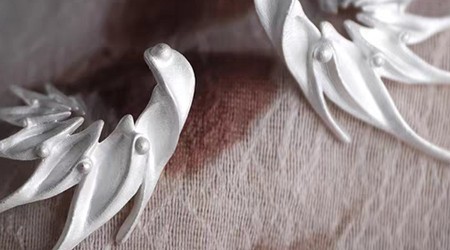
The Silver Bird Ear Climber demonstrates why everyday-wear advice must stay product-specific. Its live page identifies 925 sterling silver, a satin white-silver finish, approximately 30 mm height by 20 mm width and about 5 g per earring. It is directional and available as a left single, right single or mirrored pair.
Those are verifiable catalog facts; they do not establish universal comfort. A 5 g sculptural climber may sit comfortably on one healed lobe and pull on another. Select the correct orientation, compare dimensions with your own lobe, trial the weight for a limited period and keep the back secure without clamping. The satin finish also should not be polished automatically into a mirror surface.
Daily Care Without Over-Cleaning
Silver can tarnish during ordinary exposure. The Canadian Conservation Institute explains that silver reacts with sulfur-containing gases and that humidity affects the tarnishing rate. Tarnish is a surface reaction, not proof that an earring is counterfeit and not automatically a health hazard.
- Put earrings on after perfume, hair products and lotion have dried.
- Wipe visible moisture and residue with a clean, soft cloth after wear.
- Let the earring dry before closing it in a storage pouch.
- Store pieces separately so posts, stones and textures do not scratch.
- Follow product instructions for satin, polished, oxidized, plated, inlaid or gemstone surfaces.
- Avoid toothpaste, harsh abrasives and chemical dips unless the exact construction is compatible.
The Institute's silver-care guidance favours prevention and restrained tarnish removal. Everyday jewelry is not a museum object, but the evidence supports minimizing unnecessary abrasion.
What About Showering and Sleeping?
“Every day” does not mean “during every activity.” Soap, chlorine, cosmetics and moisture can affect surfaces and trap residue around a tight back. Bedding, hair and headphones can catch posts, hoops and climbers. A healed piercing does not make the jewelry immune to mechanical damage.
Remove earrings when an activity creates avoidable moisture, snagging or pressure unless maker and piercer guidance says otherwise. See our evidence boundaries for showering with sterling-silver earrings and sleeping in earrings.
When to Stop Wearing the Earring
Stop wearing the earring if it causes pain, persistent redness, swelling, discharge, bleeding, an itchy rash, a torn or enlarging hole, or repeated pressure marks. The American Academy of Dermatology advises stopping jewelry wear when a rash develops beneath it. A rash can have more than one cause, so repeated or severe symptoms need professional diagnosis rather than guesswork based on the word “silver.”
For a fresh or apparently infected piercing, seek qualified medical and piercing advice before removing or replacing initial jewelry. This article does not diagnose allergy or infection.
Everyday-Wear Checklist
- The piercing is fully healed and symptom-free.
- Body, post, backing, solder, inlay and coating are disclosed.
- Nickel claims state their scope; release evidence is stronger than a vague label.
- Single/pair option and left/right orientation are correct.
- Dimensions and per-earring weight are stated.
- The backing is secure without compressing the lobe.
- The finish-specific care method is known.
- Pain, rash, swelling, discharge or tissue change triggers a stop-and-check decision.
Conclusion
Sterling-silver earrings can be practical everyday jewelry for many people with healed piercings, but the answer depends on the complete object and wearer. Verify 925 fineness, every skin-contact component, nickel-release evidence, weight, fit, backing pressure and finish. Build up wear time based on comfort, maintain the earring without aggressive cleaning and stop when tissue gives a warning signal.
Browse the silver earrings collection, then use the individual product page—not the category label—as the authoritative source for material, dimensions, finish, orientation and purchase quantity.
Reviewed by the Skullearring Editorial Team on August 31, 2026. This article provides product-selection and care information; it does not replace medical diagnosis or professional piercing advice.
Sources
- Federal Trade Commission: Buying Platinum, Gold, and Silver Jewelry
- Federal Trade Commission: Jewelry Guides
- EUR-Lex: REACH Annex XVII nickel restriction
- American Academy of Dermatology: Nickel allergy
- American Academy of Dermatology: Contact dermatitis and jewelry
- Association of Professional Piercers: Picking Your Piercer
- Canadian Conservation Institute: Understanding silver tarnish
- Canadian Conservation Institute: Silver care
Tags: can you wear sterling silver earrings every day, everyday silver earrings, nickel release earrings, healed piercing earrings, sterling silver care
Related Products
Leave a comment